Men's Hiking Footwear for New England Trails: A Regional Terrain Guide
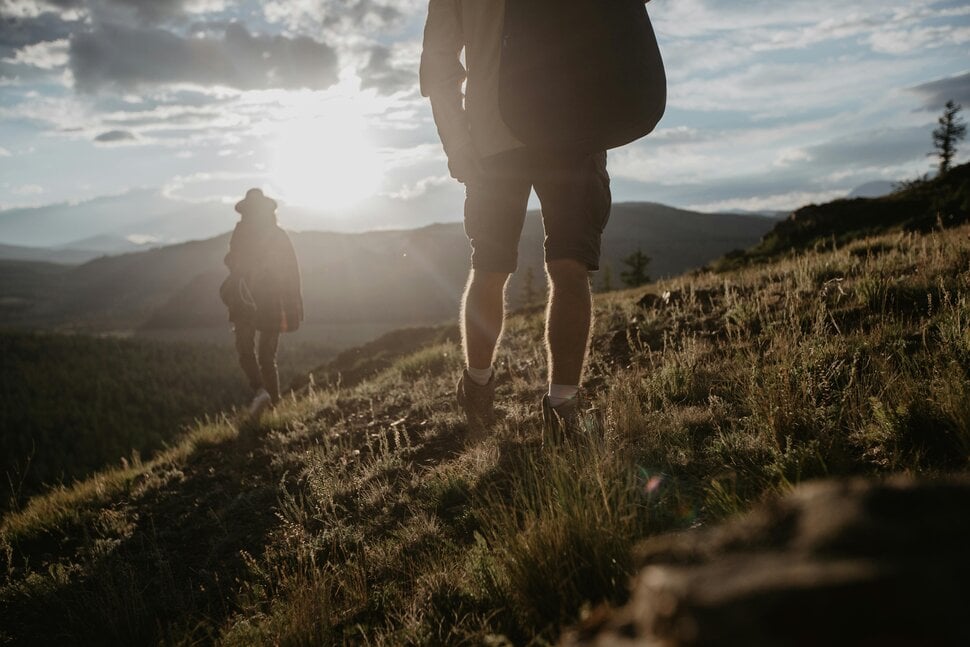
New England's trails don't look like the trails the rest of the country hikes. The terrain shifts every few miles, bare granite ridges, root-tangled hardwood forest, wet bog crossings, scrambling sections that require hand-and-foot work. Footwear designed for the dry, sandy trails of the Southwest often disappoints here.
If you're shopping for men's hiking footwear for New England, this guide breaks down what each major region demands and what features actually matter. Our broader overview of men's footwear for every trail and adventure covers the category basics if you're earlier in the buying process. We're based in Bangor and Bar Harbor and hike these trails year-round.
Why New England Terrain Demands Specific Footwear Features
Three things make New England hiking distinct:
- The rock. Granite dominates everything from Acadia to the White Mountains. Wet granite is one of the most slippery surfaces a hiker encounters. Outsole rubber compound and lug pattern matter more here than in many other regions.
- The moisture. Even in summer, trails stay damp. Morning dew, frequent rain, fog at elevation, stream crossings. Your feet will get wet unless your boots are waterproof.
- The variability. You can start a White Mountain hike in 70°F sun and finish in 45°F wind-driven rain. Your footwear has to handle all of it.
Tackling White Mountain Trails: What Men's Boots Need for the Presidential Range
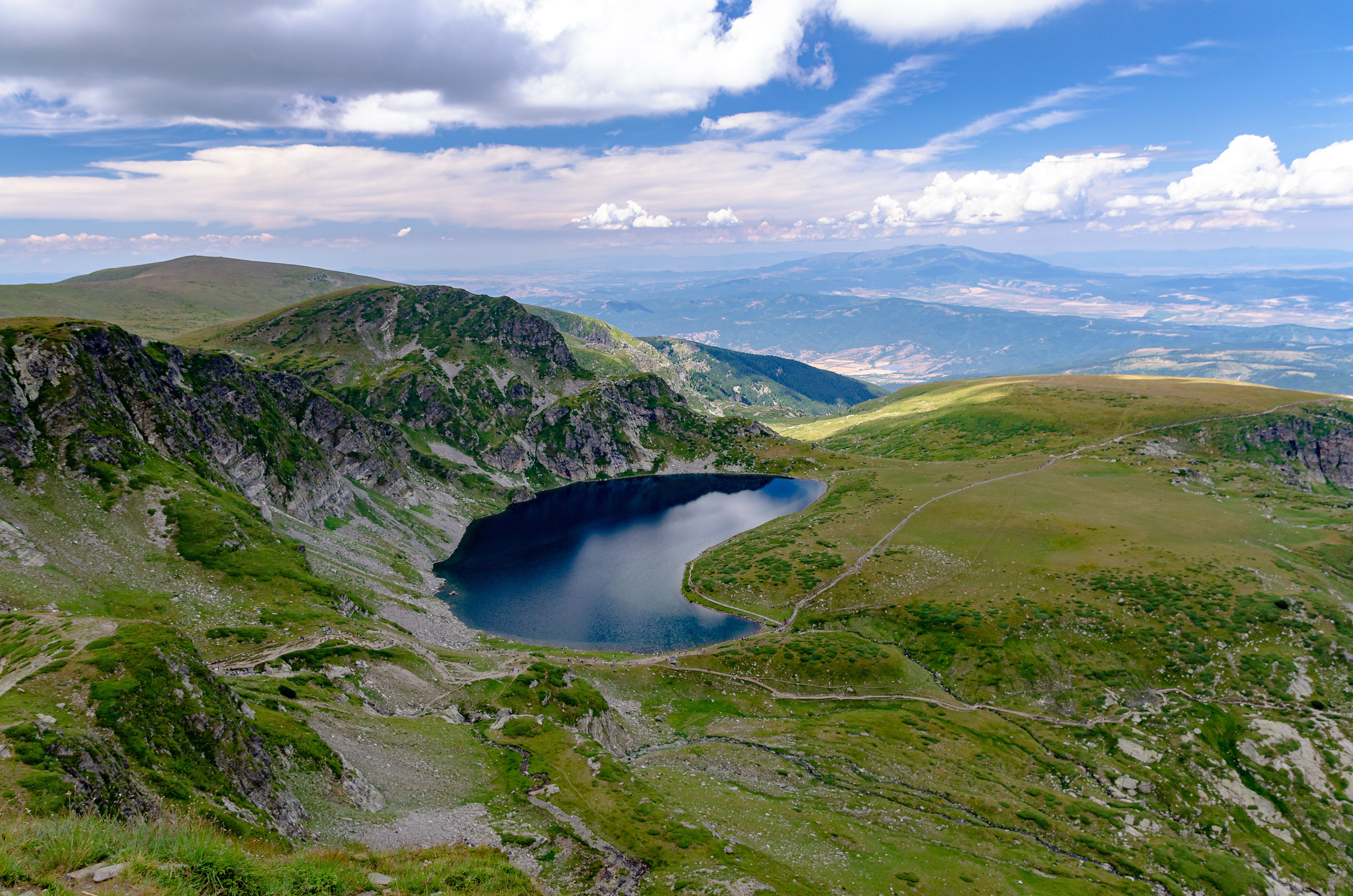
The Presidentials, Mount Washington, Adams, Madison, Jefferson, Eisenhower, are the most demanding day hikes in the East. Above treeline, the terrain is broken talus, exposed scree, and rock slabs. Wind, fog, and rapid weather changes are constant.
Footwear recommendation:
- Mid-cut waterproof hiking boot with stiff midsole. Ankle support matters on the talus, one ankle roll on Madison's summit cone can end a trip.
- Aggressive lug pattern with high-friction rubber. Vibram, Contagrip, or similar quality outsole compounds. Smooth-soled shoes are genuinely dangerous on the Presi range's exposed rock.
- Reinforced toe and heel. The talus fields chew up softer toe boxes. Look for rubber rand or reinforced TPU at the toe.
Lighter hikers and trail runners can work for fast-and-light Presi traverses if you're an experienced ridge runner with strong ankles. For most hikers, full mid-cut boots are the safer call.
Maine's Baxter State Park and Katahdin: Footwear for Technical Peaks
Katahdin is unlike any other peak in the East. The Knife Edge is a half-mile of exposed ridge with thousand-foot drops on both sides. The Hunt Trail (the AT terminus) climbs through boulder fields and over the Tableland. The Abol Trail is steep, loose scree.
This is not a trail-running peak. Even strong hikers in fit shape benefit from real backpacking boots here.
Recommended features:
- Full-grain leather or heavy synthetic upper. Katahdin's granite scrapes lighter materials quickly.
- Stiff midsole with shank. Standing on small holds and angled rock all day needs support.
- True waterproof construction. Weather changes fast at elevation; afternoon rain is common in summer.
- Solid ankle collar. The Knife Edge does not forgive a rolled ankle.
Other Baxter peaks, South Brother, Hamlin, Doubletop, are less technical but still demand boots. The park's trails are rocky and rooty even at lower elevation.
Acadia's Granite Slabs: Traction Requirements for Men's Hiking Shoes
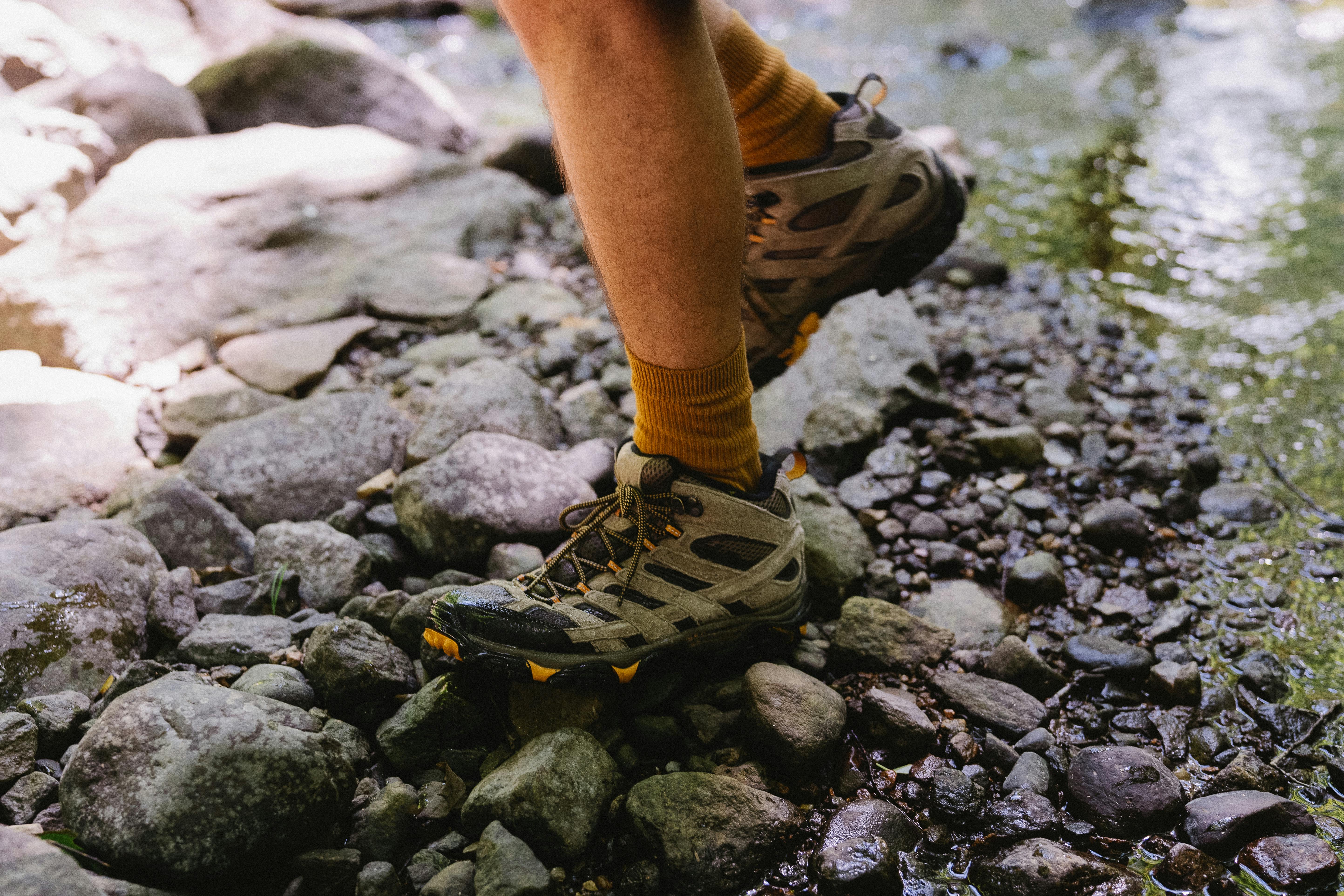
Acadia is the exception in New England in one specific way: most of its trails don't require backpacking boots. The park's iconic slabs (Cadillac, Beehive, Precipice) are short enough that light, grippy hiking shoes outperform heavier boots.
What matters in Acadia is the rubber on the bottom of the shoe. Wet Acadia granite (common in spring, fall, and any foggy morning) is slipperier than most hikers expect.
What to look for:
- Low to mid-cut hiking shoe with sticky rubber outsole. La Sportiva, Salomon, and Oboz all make options with proven grip on wet granite.
- Shallow multi-directional lug pattern. Deep aggressive lugs designed for mud can actually reduce contact area on smooth rock.
- Snug heel pocket. Scrambling sections like the Precipice involve smearing the inside edge of the foot on rock. Heel lift is unsafe.
For broader context on choosing footwear specifically for Acadia, we have a detailed trail-by-trail Acadia footwear guide that breaks down recommendations for the Precipice, Beehive, Cadillac routes, and the carriage roads.
Green Mountains and Long Trail: Multi-Day Footwear Choices
Vermont's Long Trail and Green Mountains hike differently from the granite-heavy terrain to the east. Expect more dirt and roots, more mud, more humidity, and trails that drain poorly.
For multi-day Long Trail sections:
- Mid-cut waterproof boot with aggressive mud-friendly lugs. Deep, widely spaced lugs that shed mud as you walk.
- Sturdy enough for 30–40 lb pack weight. Full Long Trail thru-hikers may go lighter; weekend backpackers benefit from more support.
- Quality wool socks and a spare pair. Long Trail mud doesn't dry until July most years. Wet feet are part of the experience. But so are dry-sock changes.
Pair your boots with the right men's hiking socks. Wool blend midweight is the standard for multi-day trips in Vermont's conditions.
Seasonal Considerations: Mud Season, Summer Humidity, Fall Ice
New England footwear strategy shifts with the season.
Mud season (April–May)
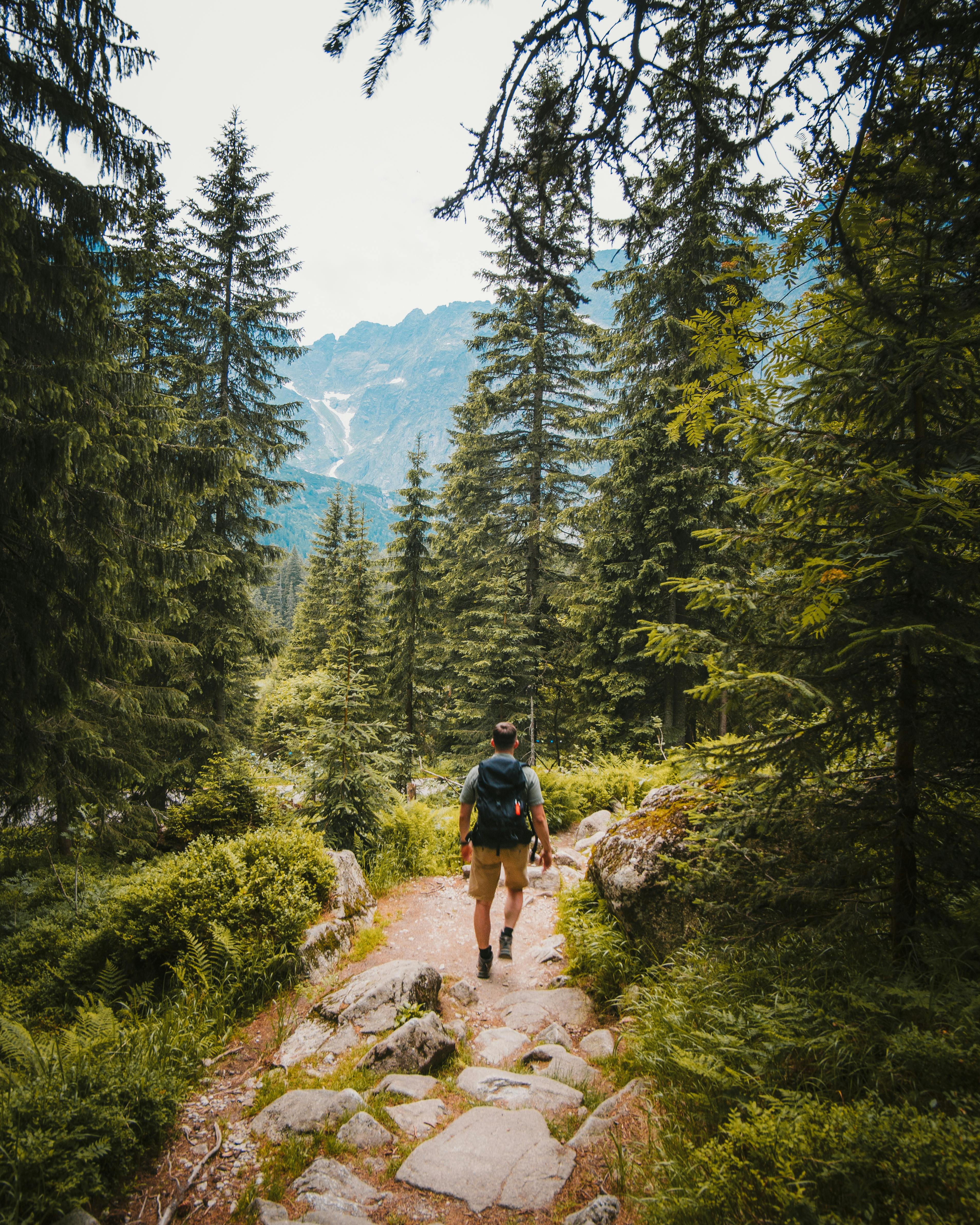
Saturated ground, hidden roots and rocks, freeze-thaw cycles. Waterproof mid-cut boots with deep lugs are the right call. Trail running shoes turn into slip-prone soaked sponges in these conditions. For a full breakdown, see our guide to spring hiking in Maine and choosing footwear for mud season.
Summer (June–August)
Drier trails (mostly), warmer temperatures, more humidity. A lighter waterproof hiker can work on most trails, or a non-waterproof breathable shoe for dry-day fast hikes. For experienced hikers comfortable with less ankle support, our men's trail running shoes subcategory is worth a look for fast summer day hikes. Carry waterproof options if rain is in the forecast.
Fall (September–October)
Cooler temperatures, wet leaves on rock (very slippery), and the first ice possible at elevation. Waterproof returns to being important; high-friction outsoles handle leaf-covered granite better than aggressive mud lugs.
Winter and shoulder season (November–March)
Different gear entirely, insulated boots, traction devices like the MICROspikes and NANOspikes in our footwear accessories section, and often snowshoes. This is beyond the scope of summer hiking footwear.
Rocky Terrain and Root Systems: Support and Protection Needs
Two trail features show up everywhere in New England that aren't common in many other regions: dense root systems through hardwood forests, and rock-and-root combination terrain that requires constant foot adjustment.
What this means for your footwear:
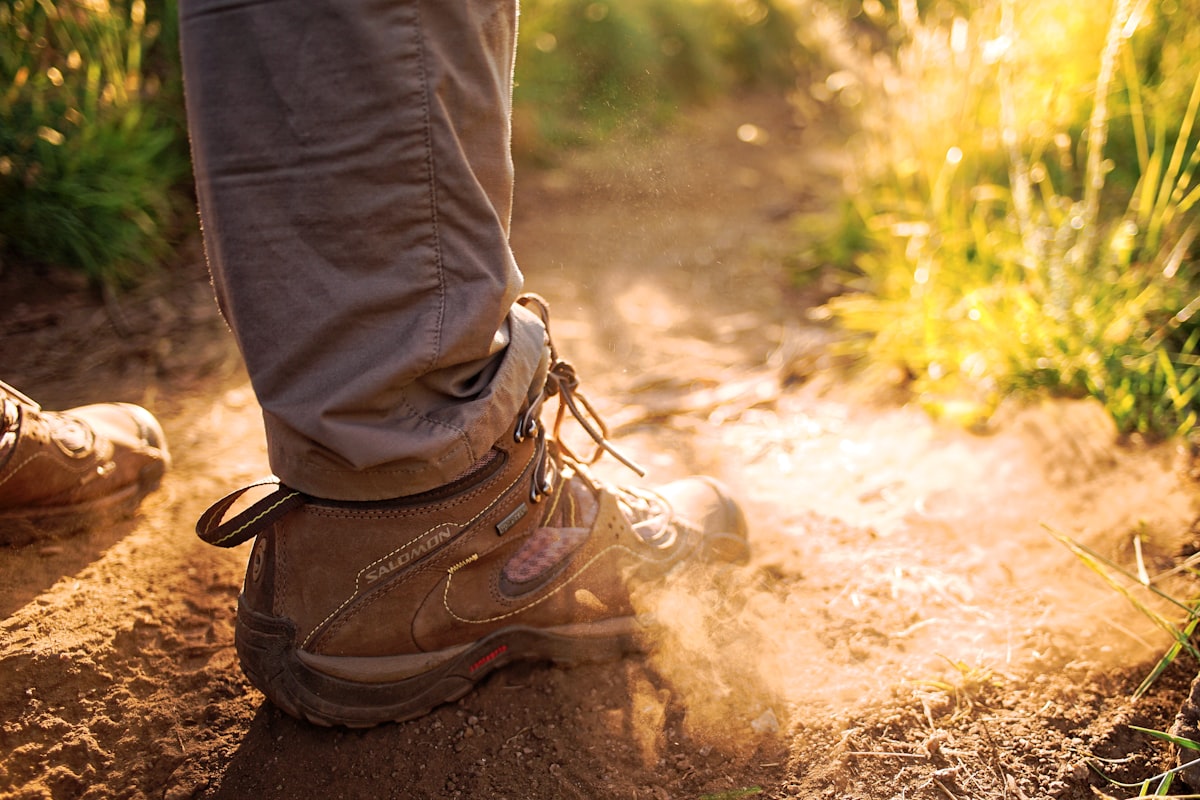
- Stiffer midsoles protect against root and rock bruising. Walking on roots and stones for hours can bruise the bottom of your foot in flexible-soled shoes.
- Toe protection prevents stubbed-toe injuries. Reinforced rubber rand or TPU toe caps are worth having on rooty trails.
- Lateral support matters more than in smoother terrain. Roots cause ankle rolls. Mid-cut collars genuinely help.
Trekking poles also pull weight off your feet on this kind of terrain. Browse our trekking poles: a pair of poles reduces foot strain on rough New England trails more than most hikers expect.
Local Hiker Recommendations: What Works in Real New England Conditions
A few brands and models show up over and over in our staff's personal kits and in customers' good reviews:
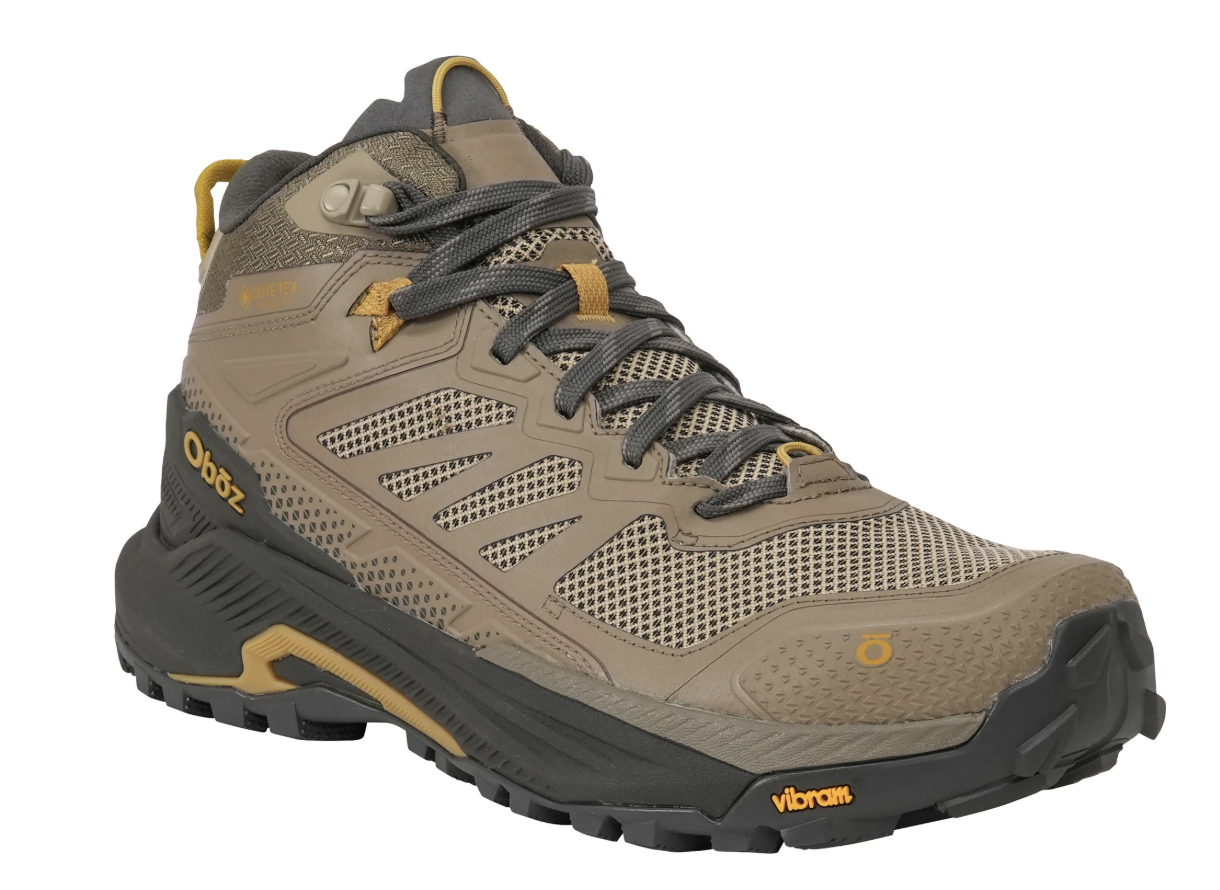
- Oboz Sawtooth II Mid Waterproof. A staff favorite for general New England day hiking. True-to-size fit, solid waterproofing, grip that holds on wet granite. One of our top sellers in men's footwear.
- Oboz Bridger 8" and 10" Insulated. For colder shoulder seasons and winter trails, heavier construction but excellent warmth.
- Oboz Katabatic Low and Mid. Lighter day hiker with strong grip. The B-Dry waterproof versions are a smart middle ground for warmer summer hiking when full backpacking boots feel like overkill.
- Salomon OUTpulse Mid GTX. Lighter and more technical-feeling than a traditional boot. Works well for hikers transitioning from trail runners who want more support.
These aren't the only good choices, but they're the ones that consistently come back for second and third pairs from repeat customers.
Ready to gear up for the season? Browse our full men's hiking footwear collection or stop into our Bangor or Bar Harbor stores, we'll match the boot to the trail you actually have planned. Before you buy, our men's hiking boot sizing guide walks through how to get the fit right. And once your new boots arrive, our guide on breaking in men's hiking boots covers the timeline before any serious New England trail.
FAQ
What are the best hiking boots for New England trails?
For general New England day hiking, a mid-cut waterproof boot with high-friction outsole rubber covers most needs. The Oboz Sawtooth II and Salomon OUTpulse Mid GTX are common staff and customer picks. For Katahdin, the Presidentials, or heavy backpacking trips, step up to a full leather or heavy synthetic backpacking boot.
Do I need waterproof boots for the White Mountains?
In most conditions, yes. White Mountain weather changes fast, and even on dry days, alpine sections often have lingering moisture, fog, and afternoon thunderstorms. Non-waterproof trail shoes work for fast-and-light summer day hikes if you can accept wet feet. For most hikers, waterproof is worth the trade in breathability.
Can I hike Katahdin in trail running shoes?
Experienced fast hikers with strong ankles sometimes do, but it's not what we recommend for most people. Katahdin's terrain, talus on the Tableland, exposed ridge on the Knife Edge, boulder scrambles on Hunt, rewards real backpacking boots with ankle support, stiff midsoles, and reinforced toes. The consequences of a slip or rolled ankle on the Knife Edge are serious.
What's the best boot brand for Maine hiking?
Oboz consistently performs well for Maine conditions, solid waterproofing, true sizing, and outsoles that hold on Acadia granite and Baxter rock. La Sportiva and Salomon also have strong options, especially for lighter and more technical footwear. Brand choice often comes down to foot shape; Oboz runs wider, Salomon and La Sportiva run narrower.
When do I need MICROspikes or NANOspikes in New England?
Late fall through early spring at any elevation, and through May at higher elevations (above 2,000 feet). MICROspikes have more aggressive teeth for ice and packed snow on real trails; NANOspikes are lower-profile for hard-packed snow, frost, and icy mixed surfaces where you want less bulk. Hard-packed snow and ice patches stay on shaded trails and north-facing slopes well into spring. Carrying traction devices in a daypack is cheap insurance for any cold-season hike.
Leave a comment
Recent articles
View all
Merino vs. Synthetic Base Layers for Winter Hiking