Climbing Pack Essentials: What to Carry for Sport, Trad, and Alpine Routes
Key takeaways
- A sport-climbing kit carries 8-12 quickdraws, a single rope, harness, shoes, chalk, belay device, and stick clip. Total under 15 pounds with water and snacks.
- A trad kit adds a rack of cams and nuts, alpine draws, a cordelette, prussik cord, and a helmet. Expect 20-25 pounds with rope.
- Alpine kits include the trad rack plus a helmet, headlamp, insulating layer, gloves, more water, and (for mixed routes) crampons and an ice tool.
- The common core across all three: rope, harness, shoes, helmet, belay device, chalk, water, food, first aid, headlamp.
- Pack heavy items closest to your back and high in the pack. Heavy gear low or far from your spine throws off your balance on uneven approaches.
You've got the pack. Now the question is what goes inside. A sport-climbing kit, a trad kit, and an alpine kit are three different beasts, and packing one when you needed the other is a frustrating way to spend a day. This guide breaks down exactly what to carry for each style, plus what's shared across all three and how to pack it so your pack carries cleanly.
One Pack, Three Loadouts
A single 30-liter climbing pack can carry any of the three kits below. What changes is the contents. Sport days are light. Trad days are heavy. Alpine days are heavy and complicated.
The exercise is to think about what each route demands and pack only that. Bringing a full alpine kit on a sport day is just extra weight. Bringing a sport kit on an alpine route is dangerous.
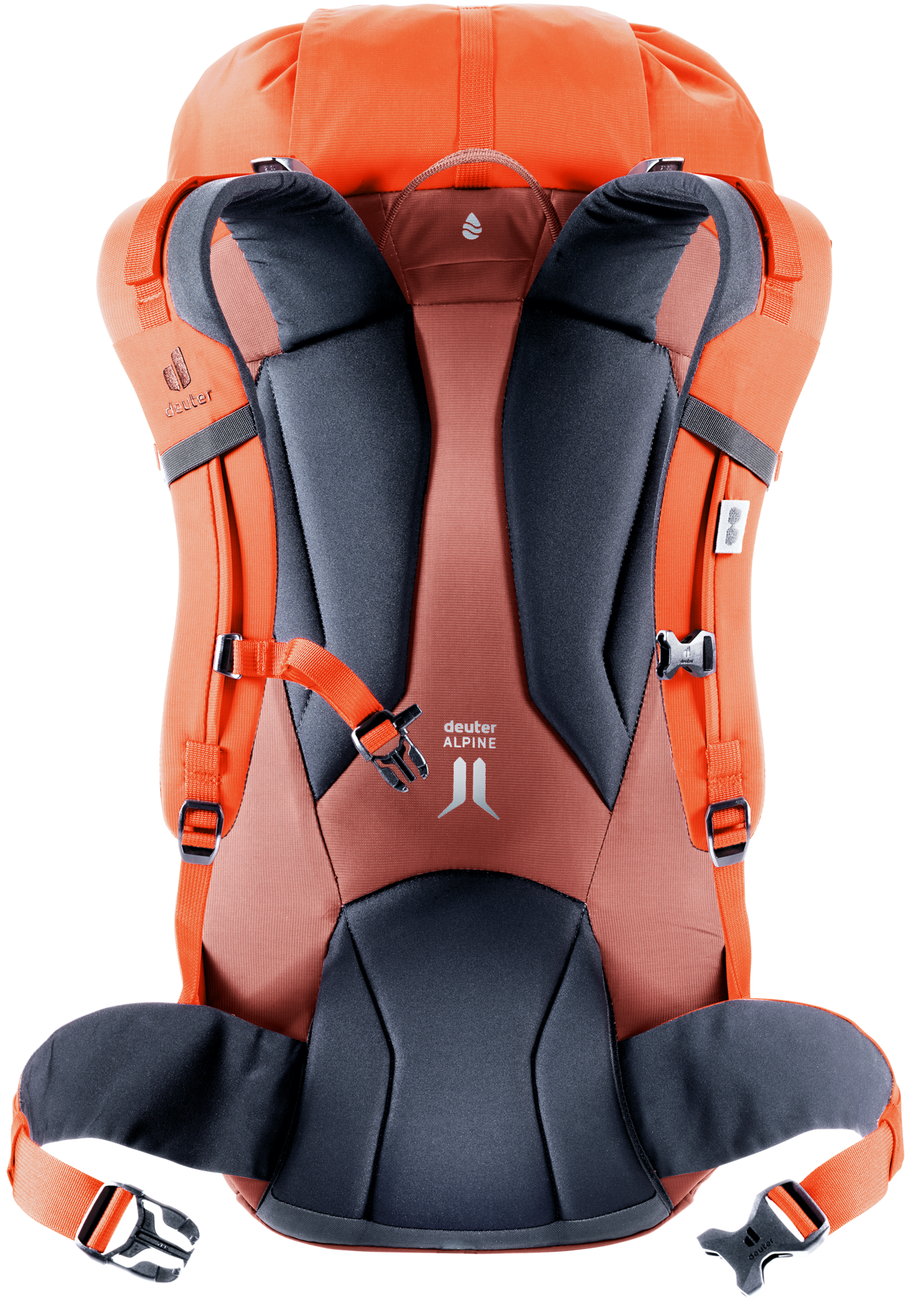
What to pack for a day of sport climbing
A sport climbing kit fits a 25 to 35L pack: a single rope (60-70m), 8 to 12 quickdraws, harness, shoes, helmet, chalk bag, belay device, locking carabiner, and a stick clip. Add water, snacks, a light layer, and a small first aid kit. Total weight runs under 15 pounds.
Rope length depends on the crag. 60m covers most US sport, but some routes need 70m or even 80m to lower safely. Bring enough quickdraws for the longest route on your tick list, plus two extra. A climbing harness designed for sport has lighter padding and quick-access gear loops compared with a trad-focused model.
Don't skip the small stuff. A chalk bag rides on your harness, not in the pack. A small first aid kit with tape and gauze covers most crag injuries. Sunscreen, snacks, water, and a light layer round out the day.
If you climb single-pitch sport at roadside crags, a rope bag setup works. If approaches stretch past 10 minutes, a real pack carries better. Most climbers settle on a 25-35L pack for sport days.
What to pack for a day of trad climbing
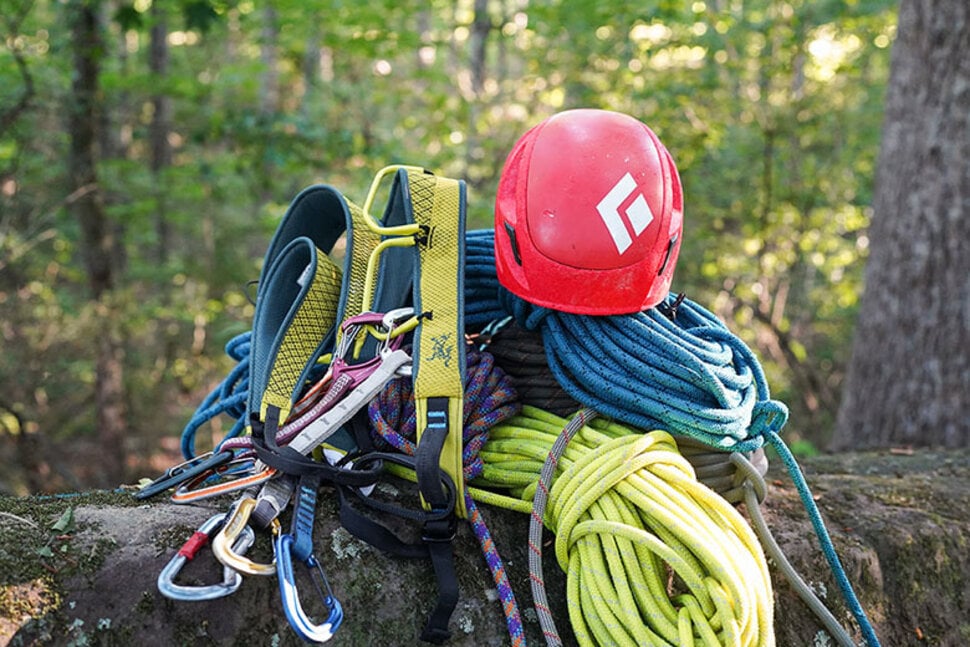
A trad climbing kit adds a rack to the sport setup: one set of cams sized for the route, one set of nuts, 6 to 12 alpine draws and slings, a cordelette, two prussik cords, a nut tool, and a helmet. Expect 20 to 25 pounds with rope in a 30L pack.
The rack is the part most worth thinking about. Carry active protection (cams) sized for the route (single set or double set depending on the climb), a full set of passive protection (nuts), and 6 to 12 alpine draws and slings for extending placements over roofs and around features.
Anchor and safety gear matters as much as the rack. A cordelette or sewn anchor sling handles most anchor builds. Two prussik cords cover self-rescue. Add a nut tool, 1-2 extra locking carabiners, and a helmet. The helmet isn't optional on trad: loose rock and dropped gear are real risks.
The rest is the same as sport: water, food, layer, first aid, phone. A 30L climbing pack is the comfortable size. Smaller starts to crowd. Bigger tempts you to overpack.
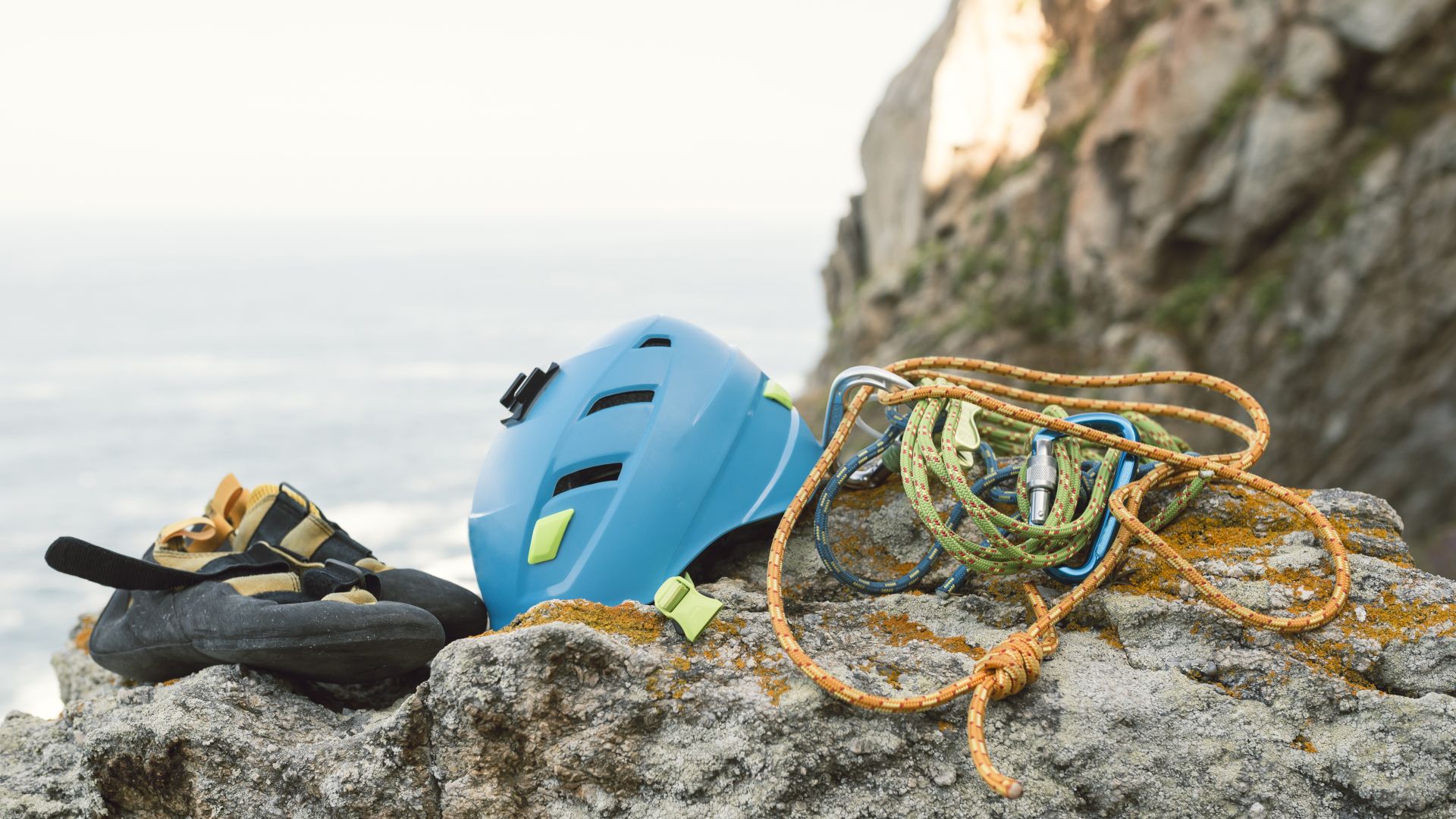
What to pack for an alpine climb
An alpine climbing kit starts with the trad rack, then adds an insulating layer, a hardshell jacket, lightweight gloves, a headlamp, an extended first aid kit, more water, and an emergency bivy. For mixed routes, add crampons and an ice tool. Volume runs 35 to 40L. Weight runs 25 to 35 pounds.
The exact list depends on conditions, but here's the baseline for a long alpine rock day:
- Climbing rack (cams, nuts, draws, slings)
- 60m rope or twin ropes
- Harness, shoes, helmet, belay device, locking carabiners
- Insulating layer (synthetic puffy works for damp conditions)
- Hardshell jacket
- Lightweight gloves
- Hat or buff
- 2-3 liters of water in bottles or a reservoir
- Higher-calorie food (bars, gels, a sandwich)
- Headlamp with fresh batteries
- Extended first aid kit
- Map, compass, or GPS
- Emergency bivy or space blanket
For mixed or icy routes, add crampons and ice tools. Volume goes up to 35-40L. Weight runs 25-35 pounds depending on how much rack and rope you're carrying.
The principle: be conservative on alpine days. Bailing off a route in deteriorating weather is normal. Bailing without an emergency layer is reckless.
The Common Core: What Goes in Every Climbing Pack
A few items belong in your pack on every climbing day, regardless of discipline:
- Rope (single, twin, or half depending on the route)
- Harness
- Climbing shoes (and approach shoes for the hike in)
- Helmet for outdoor climbs
- Belay device and 1-2 locking carabiners
- Chalk and chalk bag
- Water (1-2L sport, 2-3L trad and alpine)
- Food (snacks for short days, real food for long ones)
- Phone (for emergencies and route info)
- Small first aid kit
- Tape (athletic tape fixes blisters, splints, and torn jackets)
- Headlamp (even on day climbs, since approaches can run long)
This list doesn't change based on style. It's the floor.

Loading Your Pack: Heavy Items Close to Your Back
How you pack matters as much as what you pack. The rule for any climbing or hiking pack is the same: heavy items go closest to your back, and high, roughly between your shoulder blades.
The rope sits at the bottom or in a top compartment. The rack sits as close to your spine as possible, ideally in a middle compartment or strapped to the inside of the back panel. Layers, food, and small items fill in around the edges.
A pack loaded with heavy gear at the bottom or hanging off the back pulls your balance backward. On uneven approach trails (and a lot of New England climbing involves bushwhacking, talus, or steep scree), that's the difference between a steady hike in and a face-plant.
Pack for the Route, Not the Style
The packing list changes by discipline, but the principles don't. Carry only what the route demands. Keep heavy items close to your back. Match pack size to the kit.
If you're not sure which pack handles all three styles, our guide to choosing a climbing pack covers crag, alpine, and rope bag options. For the technical features that make a pack work on the wall, see essential features in technical climbing packs. Browse the full climbing packs collection or stop into our Bangor or Bar Harbor store to see the differences in person.
Leave a comment
Recent articles
View all