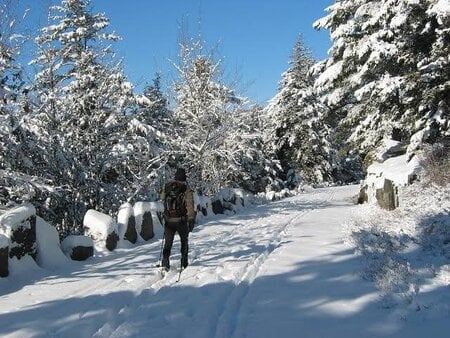
Waterproof Ratings Explained: What 10K & 20K Mean for Maine Weather
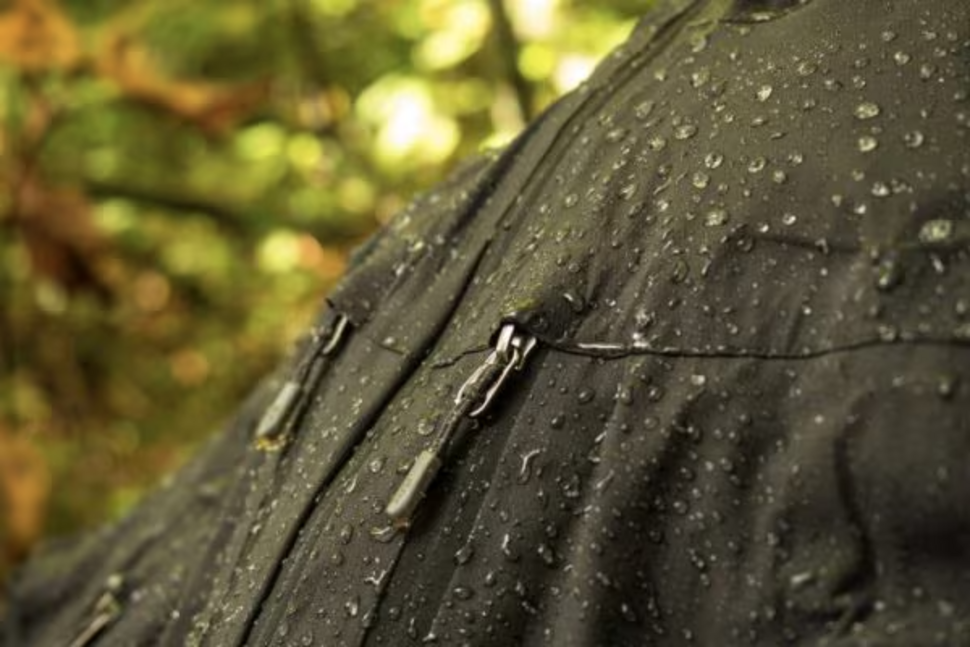
Key takeaways
- Waterproof ratings measure how much water pressure a fabric can take before it leaks, in millimeters.
- Below 10,000mm is water-resistant, not truly waterproof. It'll leak in steady rain.
- 10,000 to 15,000mm covers most Maine day hikes, ski days, and standard winter wear.
- 15,000 to 20,000mm+ is for backcountry trips and exposed summits where a soaking isn't an option.
- Seam sealing and zipper protection matter as much as the number on the tag.
Two jackets can both say "waterproof" and behave completely differently once the rain starts. The number that actually tells you what a jacket can handle is its waterproof rating, measured in millimeters. Here's what those numbers mean and which one fits the kind of wet you'll actually face in Maine.
What does a waterproof rating actually measure?
A waterproof rating measures how many millimeters of water pressure a fabric can withstand before moisture starts to leak through, using a test called the hydrostatic head test. The higher the number, the more pressure, and the more sustained rain or wet snow, the fabric can handle.
The test itself is straightforward. A column of water sits on top of the fabric, and the rating is how high that column gets before water pushes through. A 10,000mm rating means the fabric held back a column ten meters tall, which sounds extreme, but it's really a measure of resistance to the pressure of you leaning against a wet pack strap or kneeling in slush, not literal rainfall depth.
Which rating actually covers Maine's weather
| Rating | Real-world capability | Best for in Maine |
| 0–5,000mm | Water-resistant, leaks in steady rain | Light drizzle, dry errands, city wear |
| 10,000mm | The baseline for true waterproofness | Coastal hikes, ski days, standard winter wear |
| 15,000–20,000mm+ | Handles prolonged downpours and wind-driven wet | Acadia's exposed ridgelines, backcountry trips, storms |
For most people hiking Acadia's carriage roads or skiing a Sunday River day, a jacket rated 10,000mm or higher covers you. Where the higher end starts to matter is Maine's coastal storms, the kind that drive rain sideways for hours, and anywhere you're exposed on a ridge with no tree cover to duck under.
Why a low rating fails faster in Maine than it would elsewhere
Coastal Maine weather rarely stays as a light, polite drizzle. It swings between dry cold and wind-driven wet within the same week, and a jacket rated under 5,000mm has almost nothing in reserve once that wind picks up and starts forcing water through the fabric under pressure. That's the gap between "resists rain" and "blocks rain," and it shows up fastest exactly where Mainers spend their winters: on an exposed trail or a chairlift with nowhere to hide from the wind.
The parts of the jacket that matter as much as the rating
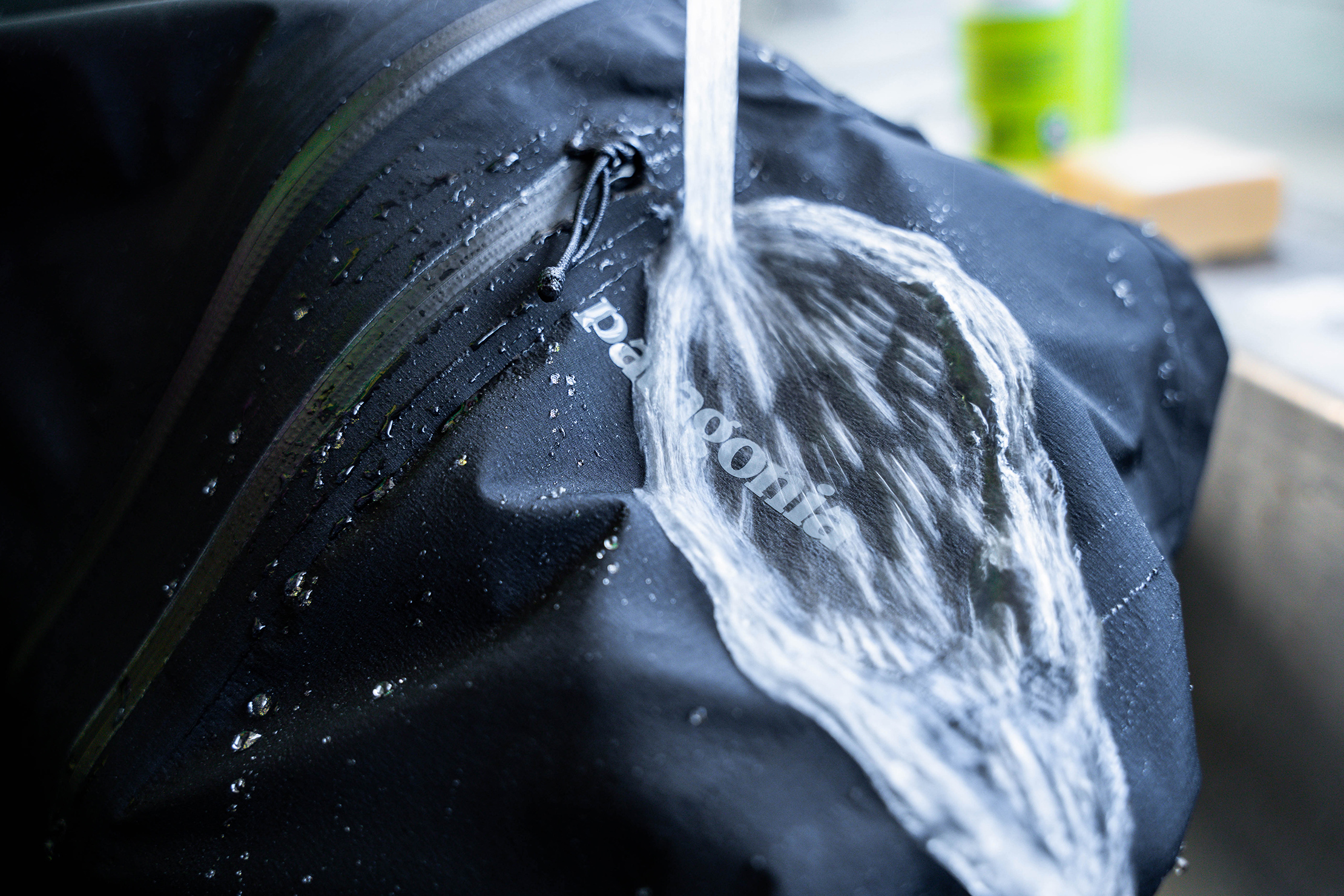
A high rating means nothing if the water gets in somewhere else. Seams are the usual leak point, so look for fully taped or welded seams rather than just a high number on the tag. Zippers are the other common gap. A jacket with a storm flap or a waterproof-coated zipper holds up far better than a standard zipper left exposed to wind-driven rain.
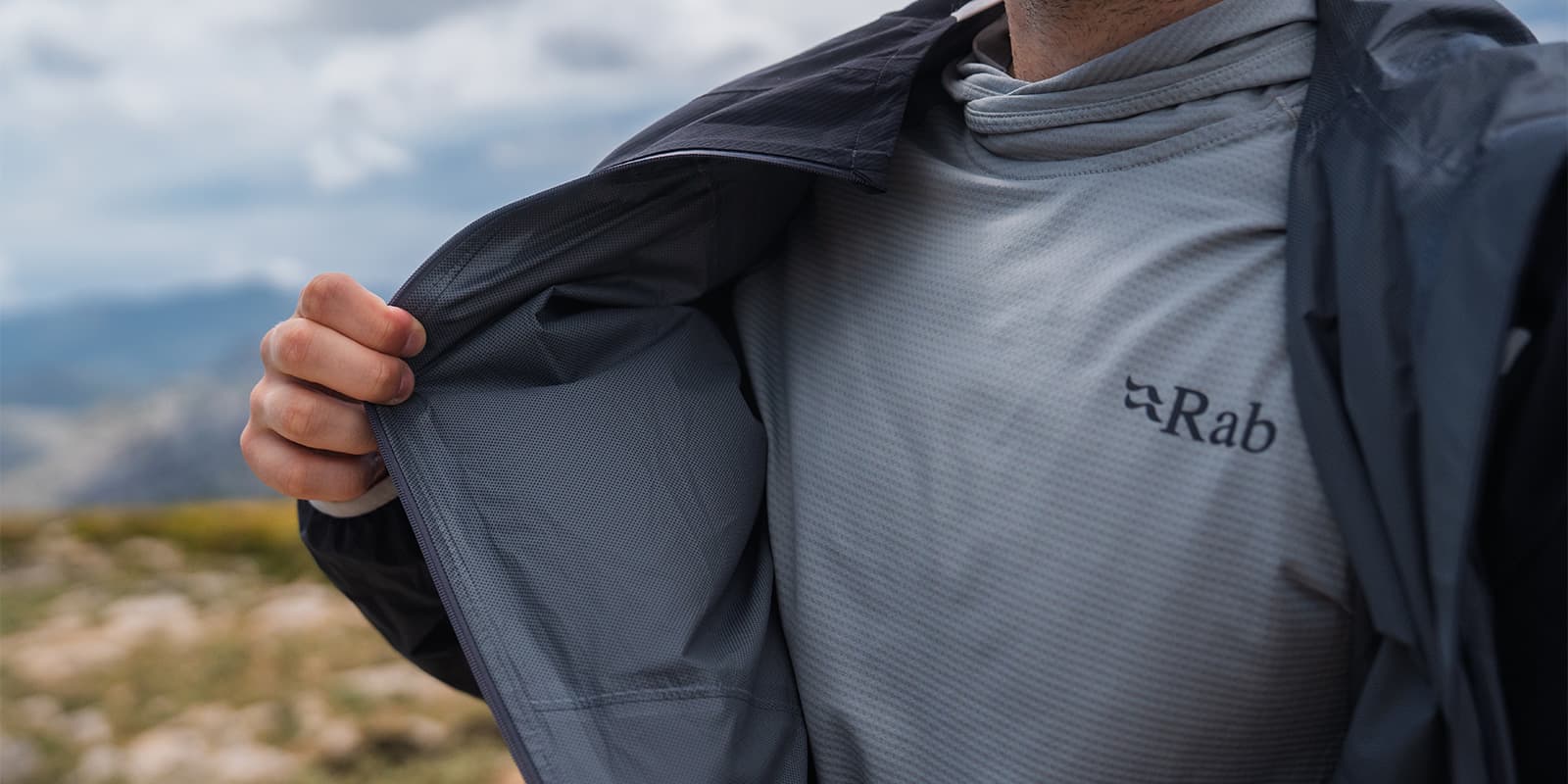
Breathability is worth checking alongside the waterproof number too. A jacket rated high on waterproofing but low on breathability traps sweat inside just as effectively as it blocks rain outside, which leaves you damp from the inside on a hard climb. The two numbers work together, not against each other.
Why the rating on the tag can be misleading over time
A jacket's waterproof rating is measured on new fabric in a lab, not on a jacket that's been through two winters of pack straps, branches, and regular washing. Abrasion and repeated washing both wear down the coating that helps the fabric hit its rated number, so a three-year-old hardshell rated 20,000mm when new may perform closer to 10,000mm in real use.
That's not a reason to distrust the rating system. It's a reason to treat the number as a starting point, not a permanent guarantee, and to keep an eye on seam tape and DWR coating as a jacket ages rather than assuming the original rating still holds.
Matching the rating to what you're actually doing
A 10,000mm jacket with taped seams is the sensible default for most Maine adventures: day hikes, ski days, dog walks in a nor'easter. Reach for 15,000mm or higher only when the trip involves real exposure, a backcountry tour, a multi-day hike, or anywhere retreating from bad weather isn't a quick option. Buying more waterproofing than the trip calls for usually just means paying for less breathability you didn't need. Our Men's Hardshell Jackets collection lists the mm rating on every jacket, so you can match the number to your trip before you buy.
Reading the second number on the tag
Most quality jackets list a breathability figure alongside the waterproof rating, written as grams per square meter over 24 hours. A jacket rated 10,000mm/10,000g means it can shed 10,000 grams of sweat vapor per square meter over a full day, which sounds technical but boils down to one question: how much will you sweat inside it.
Low-output days, like a slow winter walk or standing around at a ski lodge, don't demand much breathability, so a lower number is fine. High-output days, like a fast climb up an Acadia summit trail, generate far more moisture, and a jacket with a low breathability number will leave you damp from sweat even though the rain never got in. Matching both numbers to the activity, not just the weather, is what actually keeps you dry from every direction. The same waterproof-versus-breathable tradeoff applies to what's on your back, not just what you're wearing. Our waterproof vs. water-resistant backpacks guide covers how that plays out when you're carrying gear instead of wearing it.
If you're building out a full winter kit, the shell is only one piece. What you wear underneath it decides whether you actually stay warm and dry, and our guide to layering for a Maine winter covers how the layers work together.
FAQ
Is 10,000mm a good waterproof rating?
Yes, 10,000mm is the accepted baseline for genuine waterproofness and covers most day hiking, skiing, and standard winter wear in Maine.
Is 20,000mm noticeably better than 10,000mm?
For most everyday use, no. The jump to 20,000mm matters most for sustained backcountry exposure or severe storms, where 10,000mm can eventually get overwhelmed.
Does a higher waterproof rating mean less breathable?
Often, yes, though it depends on the specific fabric technology. Waterproofing and breathability are usually a tradeoff, which is why matching the rating to the actual activity matters more than just buying the highest number.
What waterproof rating is Gore-Tex?
Gore-Tex isn't rated in the same mm scale since it uses a different membrane technology, but its performance is generally comparable to or better than a 20,000mm rated fabric for both waterproofing and breathability.
Do seams need to be sealed even on a high-rated jacket?
Yes. A high mm rating only protects the fabric itself. Untaped seams and exposed zippers will leak regardless of how high the fabric's rating is.
Leave a comment
Recent articles
View all
Merino vs. Synthetic Base Layers for Winter Hiking