Down vs. Synthetic Insulated Jackets: Which Is Warmer for a Maine Winter?

Key takeaways
- Down gives more warmth for its weight and packs smaller than synthetic.
- Synthetic keeps insulating when it gets wet. Down largely stops.
- Maine's coastal winters are damp, which shifts the answer toward synthetic more often than a national guide would suggest.
- Down works well as a layer you put on when you stop moving, not one you hike hard in.
- Fill power tells you the quality of the down. Fill weight tells you how much warmth is actually in the jacket.
Two jackets can weigh the same and cost the same and behave completely differently the moment the weather turns. The split is what is inside them. Here is how down and synthetic insulation actually differ, and which one suits a winter spent between the coast and the mountains.
What is the difference between down and synthetic insulation?
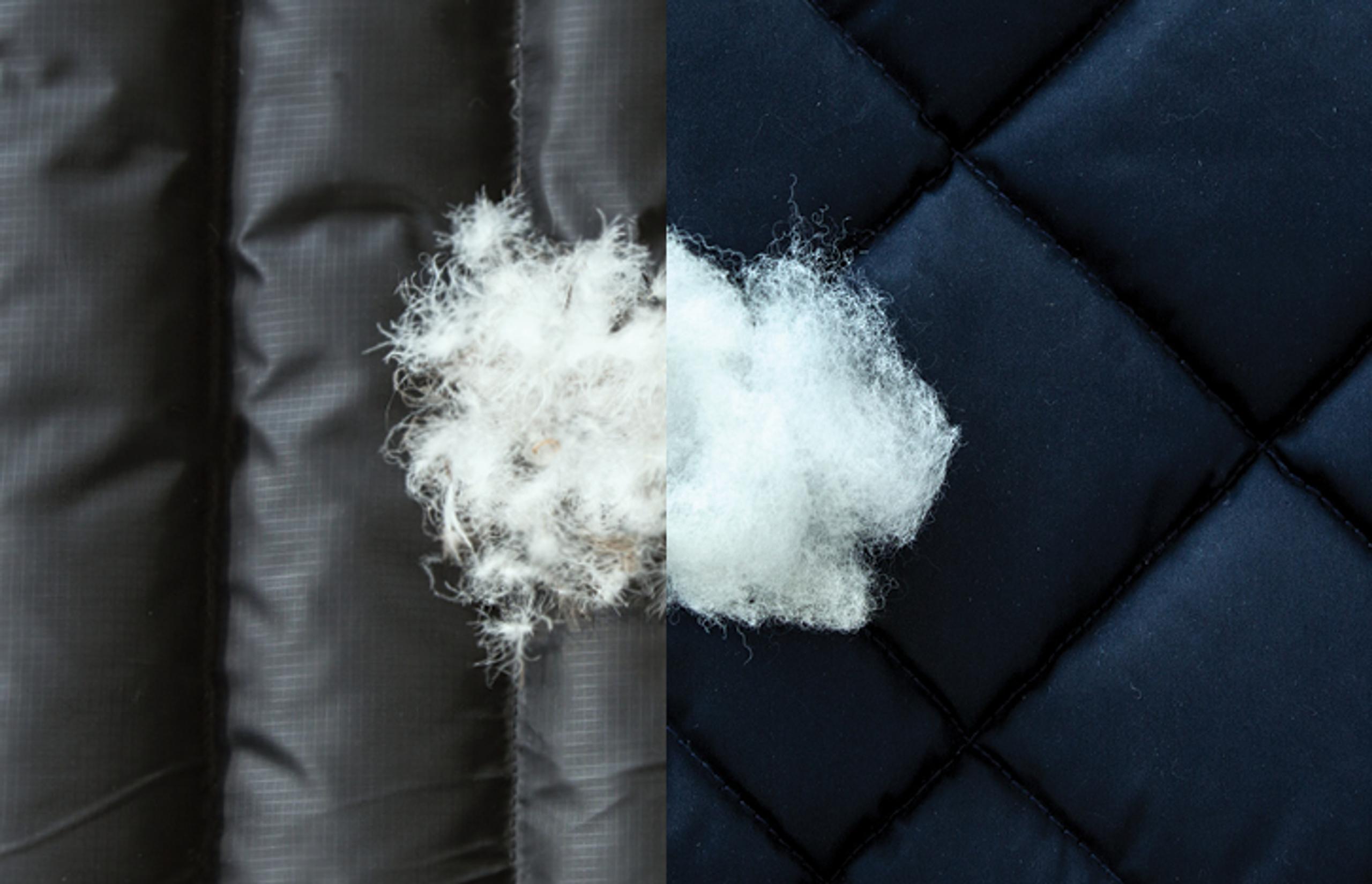
Down is the fine plumage from beneath the outer feathers of ducks or geese, and it traps more warmth for its weight than anything synthetic. Synthetic insulation is polyester fibre engineered to imitate that structure, and its advantage is that it keeps working when damp.
| Down | Synthetic | |
| Warmth for weight | Best available | Good, slightly heavier |
| Packed size | Very small | Bulkier |
| When wet | Clumps and stops insulating | Keeps most of its warmth |
| Drying time | Slow | Fast |
| Price | Higher | Lower |
| Lifespan with care | Decades | Loses loft sooner |
Everything else follows from that table. Down is the choice when weight and pack size matter and you can keep it dry. Synthetic is the choice when you cannot.
Reading fill power and fill weight
Two numbers appear on down jackets and they measure different things. Fill power, usually between 600 and 900, is the quality of the down: how much space an ounce of it fills, and therefore how much air it traps. Higher fill power means more warmth for less weight.
Fill weight is how many grams of down are actually in the jacket. This is the number that decides warmth, and it is the one most often left off the label. An 800 fill power jacket with very little down in it is a light layer, not a cold weather jacket. If you are comparing two jackets and only one lists fill weight, that is worth asking about.
Synthetic jackets are simpler. They are rated by the weight of insulation per square metre, so a higher number is a warmer jacket, with no separate quality figure to interpret.
Why Maine's winter pushes the answer toward synthetic
National guides tend to treat down as the default and synthetic as the budget alternative. That advice comes from dry continental cold, where down performs beautifully. Coastal Maine is a different problem.
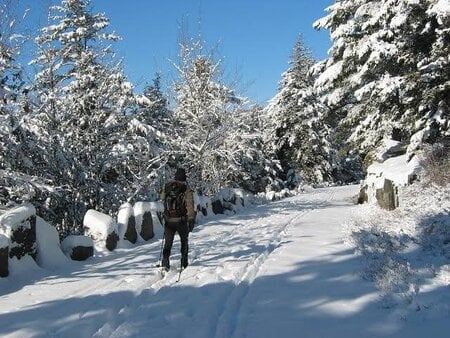
Winters here swing between hard freezes and wet systems off the water, and the wet is what matters. A February day in Bar Harbor can sit just above freezing with rain, or drop and blow snow, sometimes in the same afternoon. Down that gets soaked loses most of its insulating value and takes a long time to recover, which is a real problem when you are hours from the car. Synthetic gives up some warmth for its weight and gains reliability in exactly the conditions the coast produces most.
Inland is where down comes back into its own. Around Katahdin and in the western mountains the cold runs drier and colder, which is down's territory.
Where each one belongs in a layering system
The most common mistake is treating an insulated jacket as something you hike in. Both types work best as a layer you add when you stop, over a base layer and under a shell if it is wet. Hiking hard in a puffy usually means sweating it out from the inside, which ruins down in particular.
A practical division: synthetic for the jacket you expect to wear while active or in wet weather, down for the warm layer that lives in your pack and comes out at the summit or at camp. Plenty of Maine winters justify owning both. Our three-layer system guide covers how the insulation sits between the base layer and the shell, and our hardshell and softshell comparison covers what goes over the top. What sits underneath matters as much, and our merino and synthetic base layer comparison covers the layer against your skin.

Where fleece and active insulation fit
The down and synthetic question assumes the jacket is a puffy, but there are two other options that solve the problem differently.
Fleece is insulation you can genuinely hike in. It breathes far better than either puffy, it does not care about moisture, and it dries quickly, which is why it remains the most-worn mid-layer in most people's closets despite being heavier and bulkier for the warmth it gives. For a moderate winter day where you expect to keep moving, a fleece under a shell often beats a puffy over it. Our Men's Fleece Jackets range covers that ground.
Active insulation is the newer middle option: synthetic fill engineered to be far more breathable than standard synthetic, designed to be worn while working rather than at rest. It costs more and it is not as warm when you stop, but it removes the constant on-off cycle of a normal insulated jacket on a climb. If you find yourself repeatedly stopping to strip a layer, that is the category to look at.
The same materials come up in sleeping bags, and the answer there is different, because a sleeping bag is not carrying your sweat while you climb. Our synthetic versus down sleeping bag guide works through that separately.
Looking after either one
Down needs washing less often than people think and more carefully than they expect. Use a down-specific wash, never fabric softener, and dry it thoroughly on low heat with dryer balls to break up the clumps. Under-drying is what ruins down jackets. Store it uncompressed; leaving it stuffed in a sack for a summer permanently costs loft.
Synthetic is more forgiving and wears out more predictably. It tolerates normal washing, dries quickly, and gradually loses loft through compression rather than through mistreatment. Neither should be stored compressed.
One more thing worth knowing about down specifically: responsible sourcing certifications now appear on most reputable down jackets, covering how the birds were treated. If that matters to you, it is printed on the tag rather than something you have to research.
Browse our Men's Insulated Jackets for both types, or the Women's Outerwear range for the same split. If you are buying for a specific winter objective rather than general use, our winter hiking guide to Acadia gives a sense of what the conditions here actually demand. And if you would rather try the fit and feel the weight in person, both ranges are in the Bangor and Bar Harbor stores.
FAQ
Is a down jacket ruined if it gets wet?
Not permanently, but it stops insulating until it dries, and drying takes a long time in the field. Wash and tumble dry it properly afterwards and the loft usually comes back.
At what temperature should you wear a down jacket?
There is no fixed rating, because it depends on fill weight and what you are doing. A light down jacket suits still conditions around freezing; a heavier one handles well below that when you are not moving much.
Which is warmer, down or synthetic?
Down, for the same weight, and by a clear margin. Synthetic wins the moment either one gets wet, which is why the honest answer depends on the forecast rather than the fabric.
Leave a comment
Recent articles
View all
Merino vs. Synthetic Base Layers for Winter Hiking