Winter Hiking in Acadia: A Trail-by-Trail Guide
Key takeaways
- Most of the Park Loop Road closes for the winter, so the trailhead you use in summer may be miles from where you can park.
- The carriage roads are the most forgiving winter terrain in the park and stay walkable most of the season.
- Summit trails on bare granite turn to sheet ice. Traction is not optional above the treeline.
- The iron rung routes, Precipice and Beehive, are not winter hikes.
- Daylight is the real constraint. Sunset arrives around four in January.
Acadia in winter is a different park. The crowds are gone, the carriage roads are quiet, and the coast looks better under snow than it does in August. It is also a park where the road you planned to drive is closed, the trail you planned to climb is glazed, and the sun sets before you expected. Here is what actually changes.
Getting in: what closes and what stays open
Large sections of the Park Loop Road close for the winter, typically from early December until mid-April, along with the road to the Cadillac summit. Because of that, winter access is concentrated on the few roads that stay open, and a trailhead that is a short drive away in July can be a long walk away in February.
This is the single most common winter planning mistake in Acadia, and it is worth checking the park's current conditions before you go rather than assuming. Conditions and closure dates move year to year, and the park publishes both at nps.gov/acad.
Two other logistics change with the season. Plowing is limited to the roads and lots that stay open, so a two-wheel-drive car and summer tyres will restrict where you can realistically get to after a storm. And facilities largely close, meaning no visitor centre services, no water and no restrooms at most trailheads, so arrive with everything you need in the car.
The carriage roads: where to start
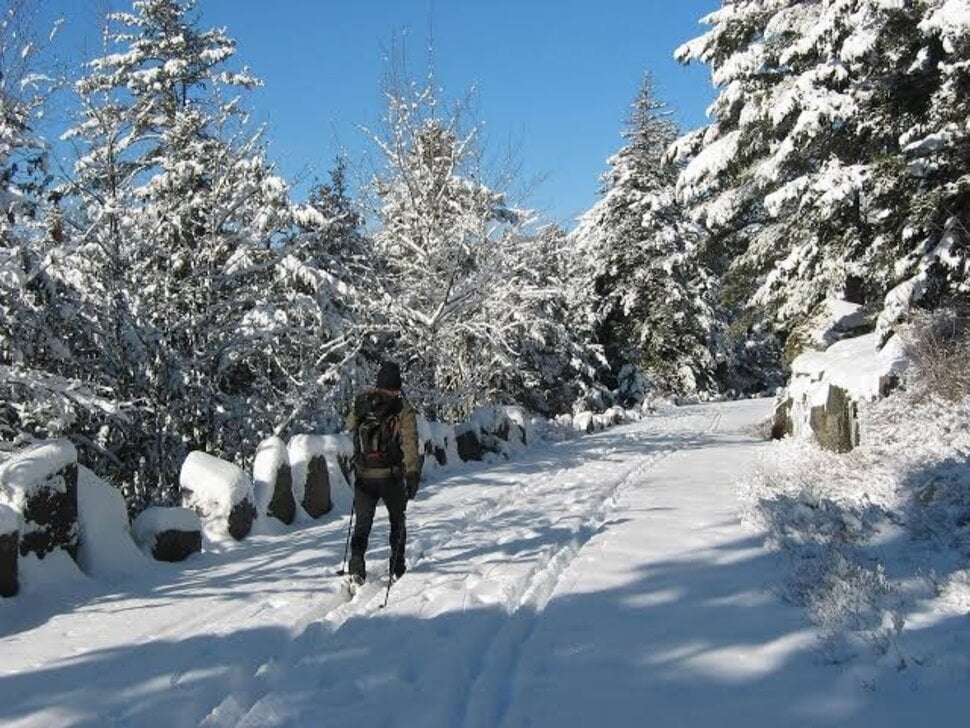
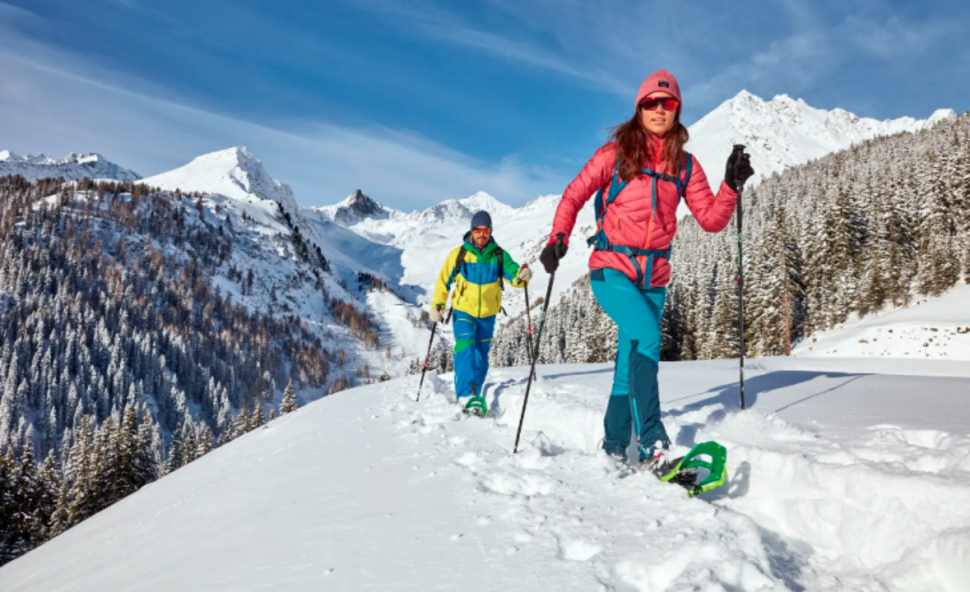
Forty-five miles of crushed stone carriage roads make up the most forgiving winter terrain in the park. They are wide, graded, largely free of exposure, and they see enough traffic that a packed track usually exists after a storm.
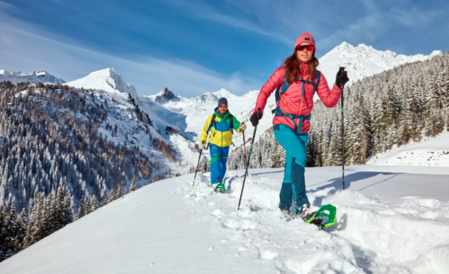
That combination is why they suit a first winter outing. You can turn around whenever your legs decide, the navigation is straightforward, and there is no committing terrain. Depending on snow depth they work for walking with traction or for snowshoes, and our beginner's snowshoeing guide covers where that line falls. One piece of etiquette matters: stay out of the groomed cross-country ski tracks, since snowshoes and boots wreck the set grooves.
Eagle Lake and the Witch Hole Pond loop are the usual starting points, both reachable from roads that stay open.
Lower trails worth doing
Jordan Pond Path runs flat around the water with the Bubbles at the far end, and it is the most scenic easy walk in the park in winter. The east side is smooth; the west side crosses log bridges and boulders that ice up, so it is worth turning back rather than pushing through if it looks glazed.
Ocean Path between Sand Beach and Otter Point stays close to the water and delivers the coastline in winter, which is the reason to come. Note that the Park Loop Road access changes in winter, so check how far you will be walking to reach it.
Gorham Mountain is the most reasonable summit in winter. It is short, the elevation is modest, and it still puts you on open granite with an ocean view. That open granite is exactly where traction matters.
The summits, and being honest about them
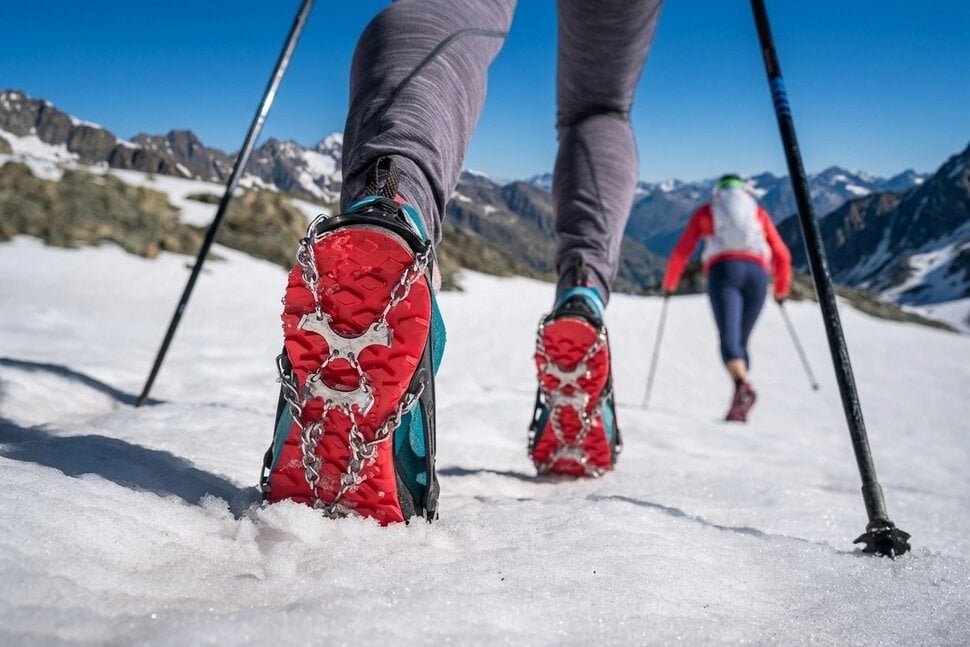
Cadillac and Dorr are doable in winter and both are more serious than their summer selves. The problem is not the grade, it is the surface. Acadia's summits are bare granite slab, and once wind has scoured the snow off and meltwater has refrozen, those slabs become sheet ice with long runouts and nothing to stop a slide. This is the terrain that decides your traction: microspikes handle most of it, and our winter traction comparison covers when you need more.
Two routes to leave alone. Precipice and Beehive rely on iron rungs and ladders bolted to near-vertical rock. Iced rungs, gloved hands and a fall you cannot arrest make them a genuinely bad idea in winter, and the park discourages them in the season.
What winter actually gives you
Worth saying why any of this is worth the effort, because the practical warnings make it sound like a chore.
The park gets roughly four million visitors a year and almost none of them come in January. Trails that require a shuttle and a queue in August are empty. The granite that looks grey in summer goes white and blue, seepage lines on the cliffs freeze into columns, and the sound changes completely once snow is down. Jordan Pond freezes. The ocean does not, which means you get surf against ice-covered rock, and that combination is genuinely rare and specific to this coast.
Wildlife is also easier to see with the leaves down and snow holding tracks. Deer, snowshoe hare, fox and coyote all leave clear sign on the carriage roads, and the birdlife shifts to the winter residents and sea ducks offshore.
What to wear and carry
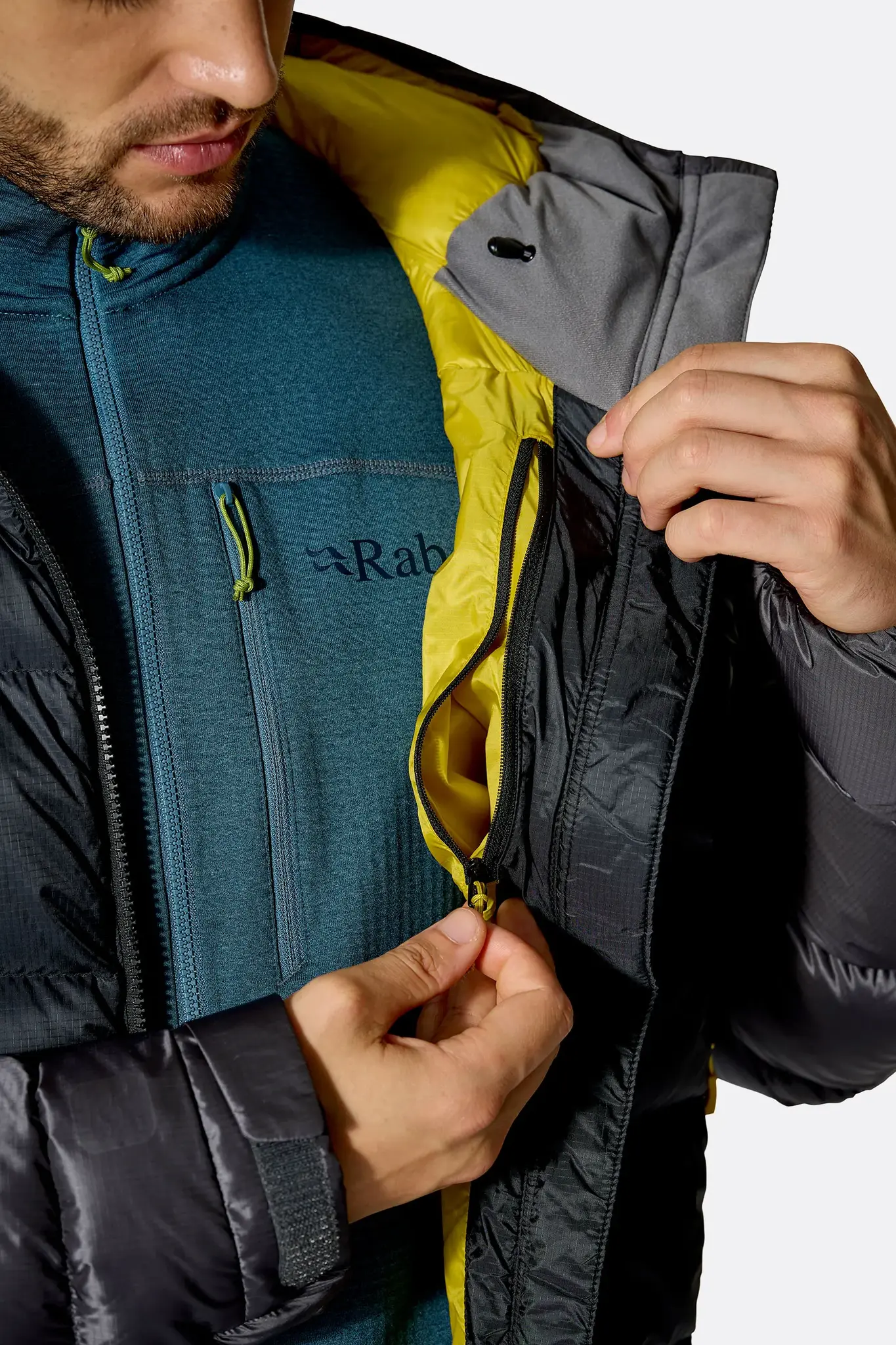
The layering system does not change, but the margins do. Sweat on the climb and then stand still on an exposed summit in wind off the water, and you get cold faster than you expect. Start slightly cold, vent early, and put an insulating layer on the moment you stop, which is exactly the job our down and synthetic jacket comparison covers. Our layering guide sets out the full system, and merino and synthetic base layers covers the layer that starts it.
Carry a headlamp, and treat this as non-negotiable rather than cautious: sunset in January is around four in the afternoon, and a two-hour walk started at one leaves less margin than it sounds like. Add more water than feels necessary, food, and warm waterproof boots, which our winter hiking boots guide covers.
For traction, boots and layers, the Snow & Ice and Men's Insulated Jackets ranges cover it, and the Bar Harbor store is a few minutes from the park entrance if you would rather sort it out on the way in.
FAQ
Can you hike in Acadia in the winter?
Yes, and it is one of the best times to be there. Most of the Park Loop Road closes, so plan around the roads that stay open and expect longer walks to some trailheads.
Do you need microspikes to hike Acadia in winter?
For anything above the treeline, effectively yes. The summits are bare granite that ices over, and boots alone are not enough on a frozen slab.
Which Acadia trails are best for a first winter hike?
The carriage roads, the Jordan Pond Path and Gorham Mountain. All three are short, straightforward to navigate and easy to turn around on.
Leave a comment
Recent articles
View all