
Merino vs. Synthetic Base Layers for Winter Hiking
Key takeaways
- Merino resists odour, stays warm when damp, and handles a wide temperature range.
- Synthetic wicks faster, dries faster, costs less and lasts longer.
- For high-output days, synthetic. For long or cold days with stops, merino.
- Blends exist for a reason and are often the sensible answer.
- Cotton is the only genuinely wrong choice, in any weather.
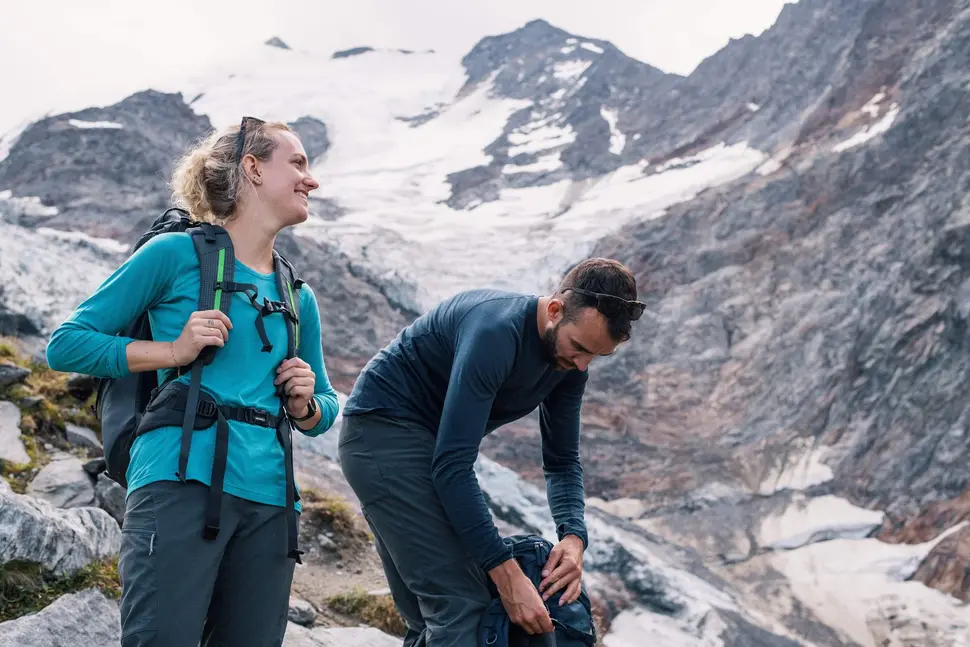
The base layer is the cheapest part of a winter kit and the one that decides whether the rest of it works. Get it wrong and no jacket will save the day, because you will be wet from the inside before you reach the first overlook. The choice comes down to two materials.
Merino or synthetic: which is better for a base layer?
Merino wool controls odour naturally, holds warmth when damp, and regulates across a wide temperature range. Synthetic moves sweat off the skin faster, dries faster, costs less, and survives more washes. Neither is better outright; they fail in different directions.
| Merino wool | Synthetic | |
| Wicking speed | Good | Faster |
| Drying time | Slower | Fast |
| Warm when damp | Yes | Partly |
| Odour control | Excellent | Poor |
| Durability | Wears sooner | Tougher |
| Price | Higher | Lower |
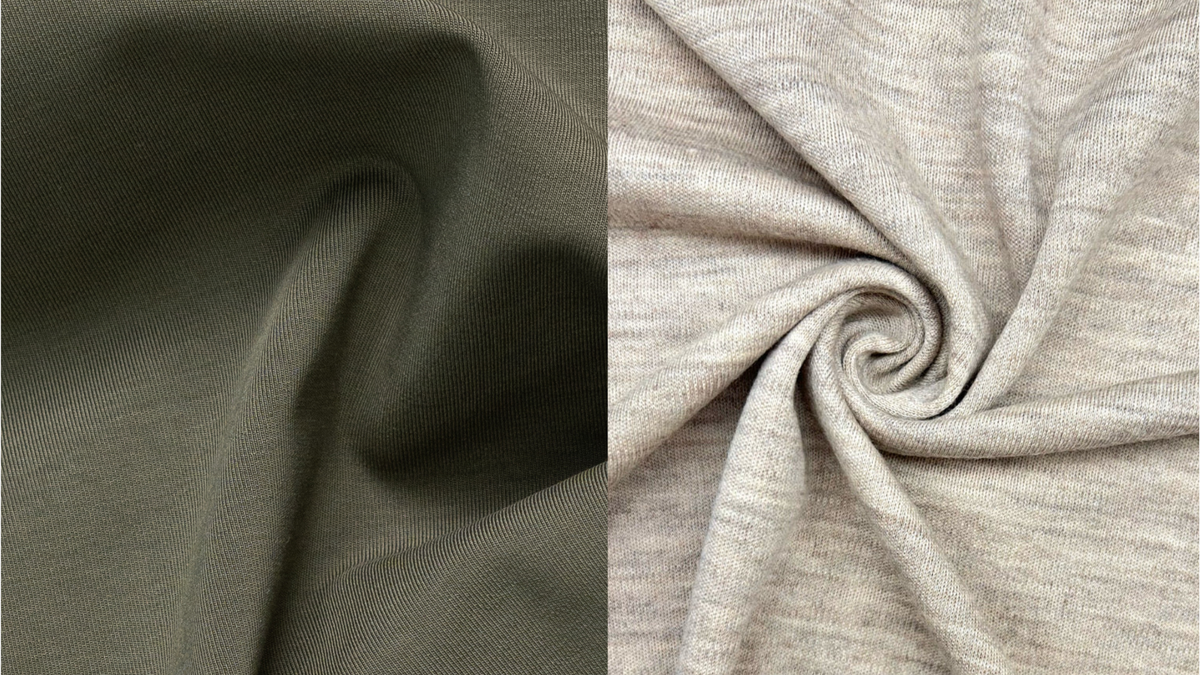
When synthetic is the right call
High-output, shorter days. If you are moving hard enough to sweat steadily, the priority is getting that moisture off your skin and out of the fabric quickly, and synthetic does both better. Winter running, a fast ascent, a day of resort skiing where you are working between lifts.
Synthetic also makes sense as a first purchase, and for anyone hard on gear. It costs less, tolerates being thrown in a normal wash, and does not thin out at the shoulders after a season the way lightweight merino can. The tradeoff is odour, and it is not subtle: synthetic base layers hold smell after a day and keep holding it through washes.
When merino earns the extra money
Long days, cold days, and days with a lot of standing around. Merino's real advantage is that it still insulates when it is damp, which matters on a winter hike where you sweat on the climb and then stop at an exposed summit in the wind. That is the moment a synthetic layer feels clammy and cold and a merino one does not.
It is also the choice for multi-day trips, where the odour resistance stops being a nicety and starts being the reason you can wear the same layer for three days. In Maine's damp coastal cold, where nothing dries fast and you are often slightly wet whether you like it or not, merino's tolerance for moisture fits the conditions well.
Why some people avoid merino
Worth being straight about the drawbacks, because most guides skip them. Merino costs two to three times what an equivalent synthetic does. Lightweight merino wears through at friction points, especially under pack straps, and a season of hard use can leave thin patches or holes. It also takes longer to dry, which is a genuine disadvantage on a trip where you are trying to dry a layer overnight.
There is a middle path that gets overlooked: merino and synthetic blends, which keep most of the odour resistance while adding durability and drying speed. For a lot of people that is the right answer rather than a compromise.

Why cotton is the one to avoid
Worth stating directly, because it is the mistake that actually sends people home early. Cotton absorbs sweat and holds it against the skin instead of moving it away, and wet cotton against your body in winter pulls heat out of you steadily. It does not dry on the trail. A cotton t-shirt under an expensive jacket undoes the jacket.
This includes the ordinary long-sleeve shirt that seems close enough. If a layer is going next to your skin in winter, it needs to be wool or synthetic, and everything else is a compromise you will feel two hours in.
Base layers for your legs
Most people buy a top and stop, which leaves the lower half in whatever was already in the drawer. The same logic applies: a thermal bottom in merino or synthetic under insulated or shell pants, with the same fit rule of snug and close to the skin.
For most Maine winter hiking, a midweight bottom under a shell pant handles the range. For lower-output days or casual wear, fleece-lined leggings do double duty as base and light insulation. Our Men's Outerwear Pants and Women's Winter Pants cover the shell layer that goes over the top.
Weight, fit and care
Base layers come in weights, usually described as lightweight, midweight and heavyweight. Midweight covers most Maine winter hiking. Lightweight suits high-output days or wearing under a midweight on the coldest trips. Heavyweight is for genuinely cold, low-activity days, and it is easy to overbuy here.
Fit should be snug without restricting. A base layer works by contact with the skin, so a loose one leaves air gaps and moves moisture poorly. Wash merino inside out on a cool, gentle cycle, skip fabric softener, and dry flat rather than hot. Most modern merino is machine washable, but heat is what shrinks and felts it.
One practical note on buying: base layers are the piece of a winter kit where trying it on matters most, because fit against the skin is the whole point and sizing varies a lot between brands and between merino and synthetic.
Our Men's Baselayer and Women's Baselayer ranges carry both materials in several weights, and the three-layer system guide covers how the base layer works with what goes over it. Once the base is sorted, the insulation is the next decision, and our down and synthetic jacket comparison covers that. The same material logic applies to your feet, which our hiking socks guide works through. For a sense of the conditions this system is being built for, our winter hiking guide to Acadia covers what a Maine winter day actually asks of it. Everything is in the Bangor and Bar Harbor stores if you would rather size it in person.

FAQ
What is warmer, merino wool or synthetic?
At the same weight they are close, and merino pulls ahead once either is damp, because it keeps insulating while synthetic loses more of its warmth.
Can you wear a merino base layer several days in a row?
Yes, and that is one of the main reasons to buy it. Merino resists odour well enough to wear for days, which synthetic does not.
Should you size up or down in a base layer?
Neither. A base layer needs to sit close to the skin to move moisture, so buy your true size and expect it to feel snug rather than loose.
Leave a comment
Recent articles
View all