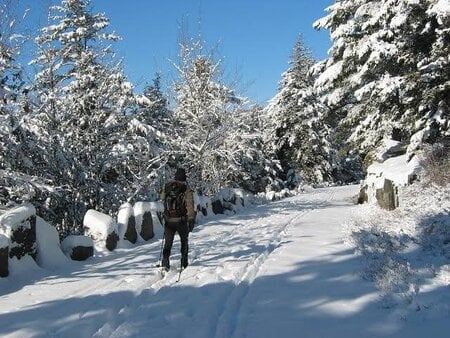
Hardshell vs. Softshell vs. Rain Jacket: Which Do You Need in Maine?

Key takeaways
- A hardshell blocks wind, rain, and snow completely but needs a mid-layer underneath for warmth.
- A softshell breathes better and moves with you, but it will soak through in a real downpour.
- Most "rain jackets" are actually lightweight hardshells built for showers, not storms.
- Coastal Maine's wet cold and Katahdin's dry wind call for different shells, sometimes on the same trip.
- If you only buy one, a 3-layer hardshell covers more of a Maine winter than a softshell does.
Standing in front of a wall of jackets trying to figure out the difference between a hardshell, a softshell, and a rain jacket is a common problem for anyone gearing up for a Maine winter. The three types solve different problems, and picking the wrong one means either sweating through a hike or getting soaked on the summit. Here's how to tell them apart and which one fits your trip.
What's the real difference between a hardshell, a softshell, and a rain jacket?
A hardshell is a stiff, fully waterproof outer layer built to block wind, rain, and snow completely. A softshell is a stretchy, breathable layer that resists wind and light moisture but isn't meant for sustained rain. A rain jacket is usually a lighter, simpler hardshell, built for showers rather than storms.
| Type | Waterproofing | Breathability | Best for |
| Hardshell | Fully waterproof, taped seams | Lower, can feel clammy | Heavy rain, wet snow, exposed summits |
| Softshell | Water-resistant only | High, moves with you | Cold, dry, active days |
| Rain jacket | Waterproof, lighter build | Moderate | Showers, everyday wear, packable backup |
The material tells the story. Hardshells feel stiff and a little crinkly because the waterproof membrane needs a rigid outer face to hold up under pressure. Softshells feel soft and stretchy because they're woven, not laminated, which is why they breathe so much better and move so much easier. That same waterproof membrane technology shows up outside of jackets too. If you're curious how it performs underfoot, our GORE-TEX vs non-GORE-TEX hiking boots guide breaks down the same tradeoff for footwear.

When a hardshell earns its spot on a Maine trail
A hardshell is the right call whenever you can't control the weather, which in coastal Maine is most of the year. Acadia's granite summits sit exposed to wind off the water, and a squall can roll in with almost no warning. A hardshell over a warm mid-layer handles that without letting a drop through.
The tradeoff is breathability. Hardshells trap more heat and moisture inside than softshells do, so they work best paired with a mid-layer you can vent or shed on the climb up, then zip back into at the summit when the wind picks up.
When a softshell is the smarter choice instead
A softshell earns its keep on cold, dry, high-output days: a fast winter hike, a groomed ski tour, splitting wood in the yard. It moves with your body, dumps heat fast, and won't leave you swimming in your own sweat halfway up a climb. Browse our Men's Softshell Jackets collection to see the options built for exactly those days.
Where a softshell falls short is sustained wet weather. The DWR coating on most softshells sheds light drizzle, but it isn't built for hours of steady Maine rain or slushy coastal snow. On a forecast that could turn wet, a softshell is a layering piece, not your outer defense.
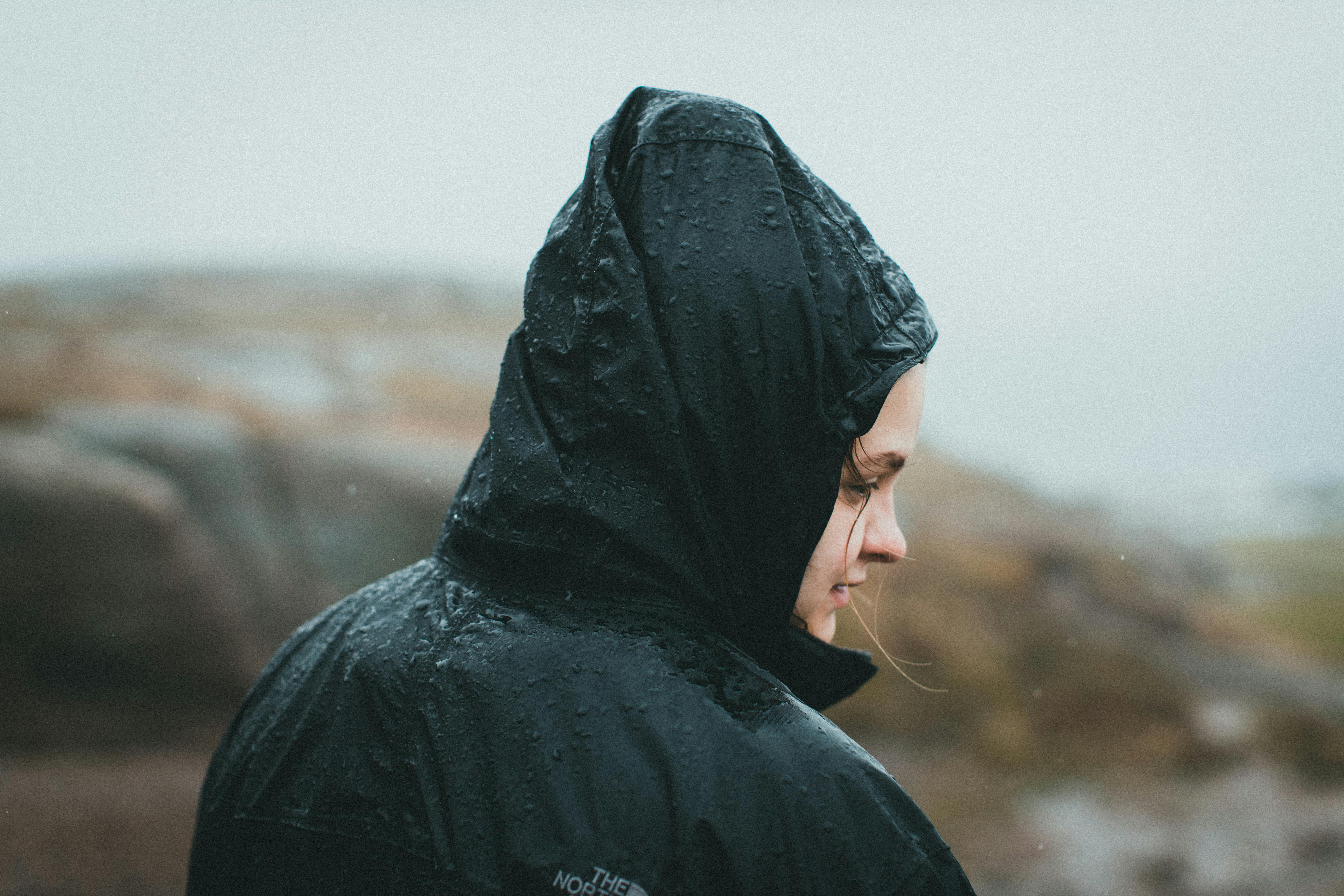
Where a "rain jacket" fits into all of this
Most jackets marketed as rain jackets are a lighter category of hardshell, built for commuting and everyday showers rather than backcountry storms. They're fully waterproof, just with less rugged fabric and fewer features than a mountaineering hardshell.
For a quick errand run in a Bangor downpour, a packable rain jacket is often all you need. For a full day on an exposed Acadia trail in January, you want the more durable hardshell built to take a beating.
Building the right system for a Maine winter
The honest answer for most Maine adventurers is that a hardshell and a softshell both earn a place in the closet, because Maine's weather swings between dry cold snaps and wet coastal storms in the same week.
If you're building your system from scratch, start with a hardshell. It covers more of the winter conditions Mainers actually face, from a wet Bar Harbor February to an exposed Katahdin ridge line, and you can always layer a lighter softshell or fleece underneath on the colder, drier days. Browse our Men's Hardshell Jackets collection to see the options we stock and staff-test ourselves. Getting the layers underneath right matters just as much as the shell itself, and our 3-layer system for Maine winters walks through exactly how we build that from the skin out.
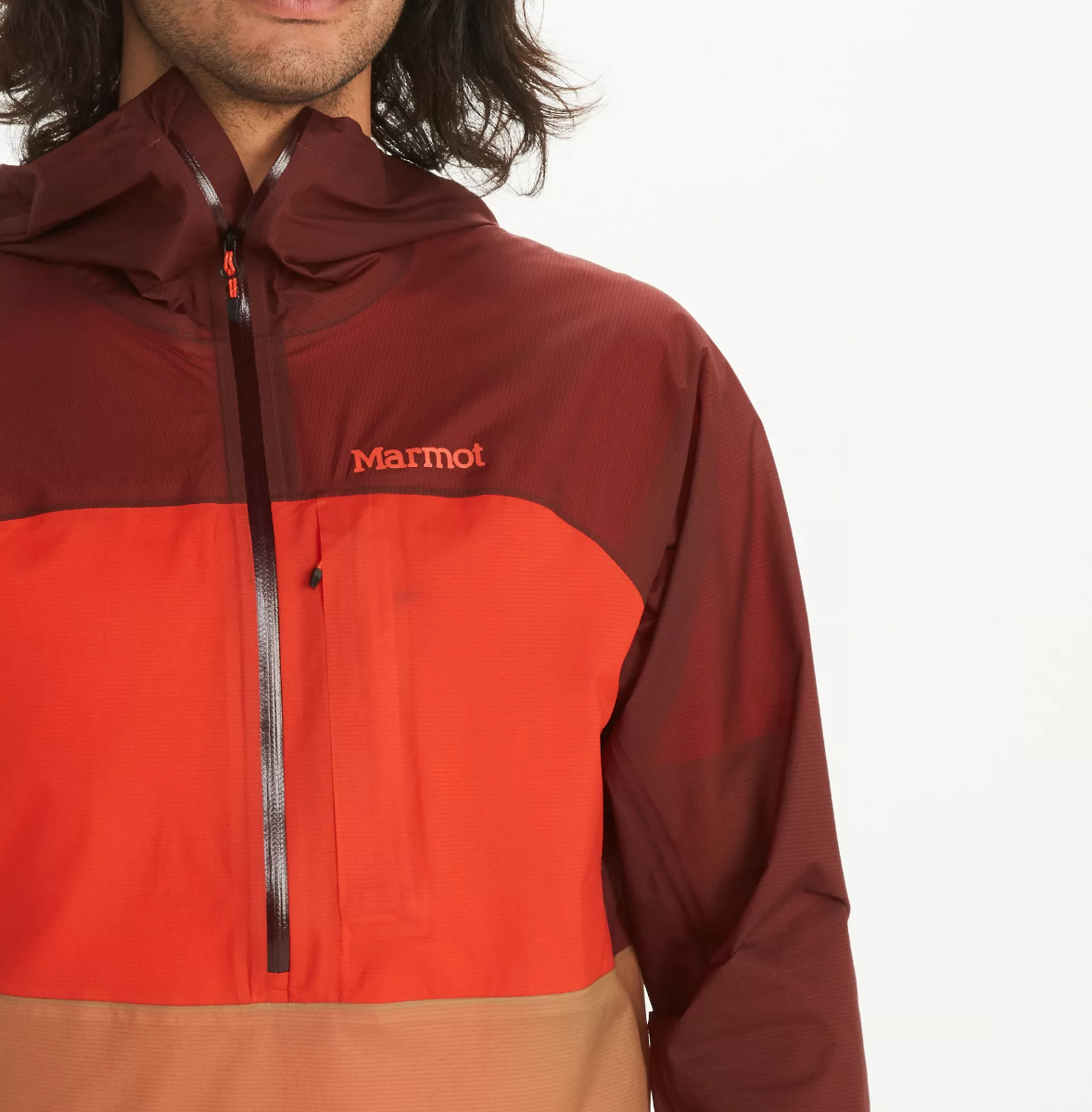
Keeping whichever shell you pick actually working
A hardshell or softshell only performs as well as its outer coating. Both rely on a DWR, or durable water repellent, finish that makes rain bead up and roll off instead of soaking into the fabric. That coating wears down over time from dirt, body oil, and regular washing, which is why a jacket that used to shed rain can start to feel damp and heavy after a season or two of hard use.
The fix is simple and easy to skip: wash the jacket occasionally with a gear-specific detergent, not regular laundry soap, and reapply a DWR treatment once the water stops beading on the surface. A quick test on any jacket is to run it under a tap. If the water spreads out and darkens the fabric instead of rolling off, the coating needs a refresh.
FAQ
Can you wear a softshell jacket in the winter?
Yes, on cold, dry days with light wind. A softshell won't hold up through sustained rain or wet snow, so pair it with a hardshell for backup if the forecast is uncertain.
Is a rain jacket the same thing as a hardshell?
Mostly. Rain jackets are usually a lighter, simpler hardshell built for showers rather than mountaineering. Both use a waterproof membrane, just in different weights and durability.
Do I need both a hardshell and a softshell?
For a full Maine winter, yes. A softshell handles the active, dry days, and a hardshell covers the wet, windy, or exposed ones. Most Mainers end up owning both.
What should someone buy first for Maine weather?
Start with a hardshell. It covers the widest range of Maine conditions, from coastal rain to summit wind, and you can layer underneath it as temperatures drop.
Is Gore-Tex a hardshell or a softshell?
Gore-Tex is a waterproof membrane technology used mainly in hardshells, though some softshells use lighter, more breathable Gore-Tex fabrics for wind and light-rain resistance.
Leave a comment
Recent articles
View all
Merino vs. Synthetic Base Layers for Winter Hiking