Recreational vs. Backcountry Snowshoes: Which Type Fits Your Adventures?
Standing at the threshold of winter adventure, you face a fundamental choice that will shape your snowshoeing experience for seasons to come: recreational or backcountry snowshoes? While both types allow you to explore snow-covered landscapes, they're engineered for dramatically different terrains, conditions, and adventure styles. Choosing recreational snowshoes for aggressive mountain terrain leads to frustration and potentially dangerous situations, while bringing technical backcountry snowshoes on groomed park trails means carrying unnecessary weight and complexity while sacrificing comfort on packed surfaces.
Understanding the fundamental differences between recreational and backcountry snowshoes—their construction, features, performance characteristics, and ideal applications—empowers you to invest in equipment that matches your actual winter adventures rather than aspirational fantasies or marketing hype. This comprehensive guide explores both snowshoe categories in depth, helping you honestly assess your needs and select the snowshoe type that will deliver optimal performance, safety, and enjoyment across the winter terrain you'll actually encounter.
Understanding Recreational Snowshoes
Design Philosophy and Construction
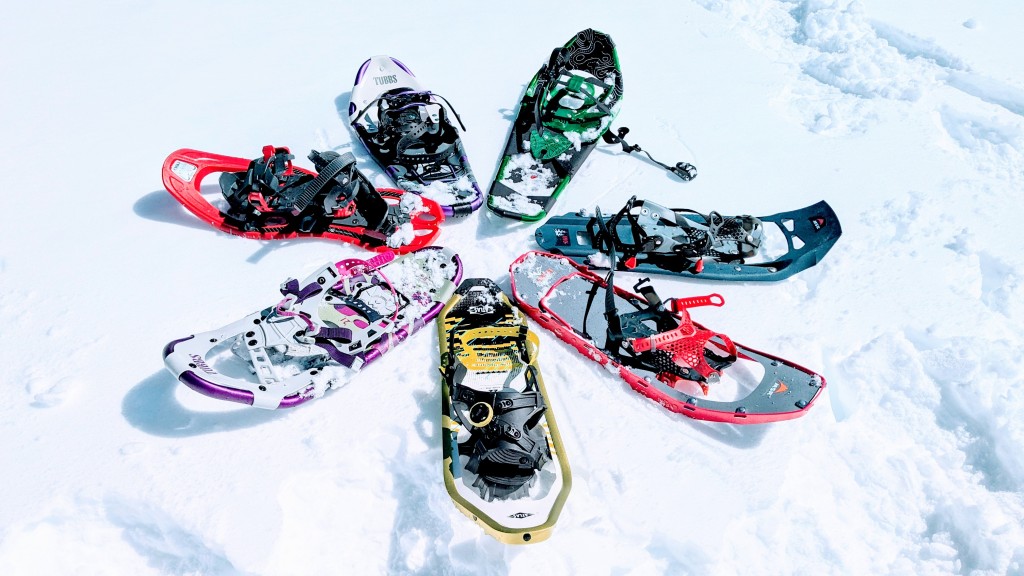
Recreational snowshoes are engineered for comfort, ease of use, and excellent performance on groomed trails, packed snow, and moderate terrain. These user-friendly designs prioritize features that make snowshoeing accessible and enjoyable for beginners, families, and anyone whose primary interest lies in pleasant winter walks rather than technical mountain adventures.
The construction typically features simpler, more affordable materials than backcountry alternatives. Aluminum frames provide lightweight durability at reasonable costs, while molded plastic decking offers adequate flotation for the packed and semi-packed snow conditions recreational users typically encounter. The bindings emphasize ease of entry and exit, with straightforward strap systems that accommodate various boot types including insulated winter boots, hiking boots, and even snow boots.
Recreational snowshoes generally range from 21" to 27" in length with moderate widths (8-9"), providing sufficient flotation for packed to moderately deep snow without the bulk and weight that technical designs require. The smaller, lighter construction makes recreational snowshoes less fatiguing for casual users who prioritize comfort over extreme performance.
Key Features of Recreational Snowshoes
Simple Traction Systems: Recreational snowshoes feature basic traction—typically small crampon-like teeth under the binding and perhaps modest traction bars along the frame perimeter. This limited traction handles flat to gently rolling terrain and provides security on hardpack and moderate inclines, but struggles on steep slopes or icy conditions where aggressive bite becomes critical.
Fixed or Rotating Bindings: Many recreational models use fixed-rotation bindings without heel lifts, creating natural walking motion on flat terrain. Some mid-range recreational snowshoes include basic heel lifts (climbing bars) for occasional moderate ascents, though these typically aren't as robust as backcountry climbing systems.
Comfort-Focused Design: Padding, flexible bindings, and forgiving flex patterns prioritize all-day comfort over maximum performance. These snowshoes bend and move more naturally with your stride on groomed surfaces, reducing the stiff, clunky feeling that technical snowshoes can create on easy terrain.
Affordable Pricing: Recreational snowshoes typically range from $100-$250, making winter adventure accessible without significant investment. This affordability encourages families to equip multiple members without financial strain.
Ideal Applications for Recreational Snowshoes
Groomed Trail Systems: Parks, nature centers, and winter recreation areas often maintain packed snowshoe trails perfect for recreational equipment. The firm, even surfaces don't require aggressive traction or maximum flotation, allowing recreational snowshoes to perform optimally.
Flat to Gentle Rolling Terrain: Recreational snowshoes excel on moderate topography without significant elevation gain. Gentle hills and flat valleys provide excellent snowshoeing without demanding the technical capabilities of backcountry gear.
Established Routes: Popular snowshoe destinations where previous traffic packs the trail create ideal conditions for recreational snowshoes. The consolidated snow provides support that reduces required flotation while the predictable terrain doesn't demand aggressive traction.
Family Outings: When introducing children and non-athletic family members to snowshoeing, recreational models provide accessible entry points. The lower costs allow equipping entire families, while the user-friendly designs don't intimidate beginners.
Fitness and Exercise: Many people snowshoe primarily for winter cardio workouts on local trails near home. Recreational snowshoes provide adequate performance for fitness goals without the weight and complexity of technical gear.
Limitations of Recreational Snowshoes
Recreational snowshoes reach their limits quickly when terrain becomes challenging. Steep ascents overwhelm basic traction systems, causing slipping and insecurity. Deep, unconsolidated powder in the backcountry requires more flotation than recreational sizes typically provide. Technical terrain with varied slopes, obstacles, and demanding route-finding exceeds recreational snowshoe capabilities, creating frustration and potential safety concerns.
The simpler construction also means reduced durability under aggressive use. Recreational snowshoes handle casual use admirably but may not withstand years of heavy backcountry abuse that quality technical models endure.
Understanding Backcountry Snowshoes

Design Philosophy and Construction
Backcountry snowshoes are engineered for serious winter mountain travel, prioritizing performance, durability, and safety in demanding terrain and conditions. These technical designs assume users will encounter steep slopes, variable snow conditions, heavy loads, and situations where equipment failure could create dangerous circumstances.
The construction employs premium materials selected for strength-to-weight ratios and longevity. High-grade aluminum alloys, steel components in high-stress areas, and advanced composite materials create snowshoes that withstand years of aggressive use. The MSR Lightning Ascent series exemplifies this approach with I-beam frame construction and TPU-coated nylon decking that balances light weight with exceptional durability.
Backcountry snowshoes feature larger surface areas (typically 22"-30" with wider decking) to provide flotation in the deep, unconsolidated snow common in wilderness areas. The increased size ensures you stay on top of powder rather than exhausting yourself post-holing through it.
Key Features of Backcountry Snowshoes
Aggressive Traction Systems: Technical snowshoes feature substantial crampon systems with multiple contact points—large toe crampons with 1-2 inch teeth, heel crampons, and aggressive traction rails along frame perimeters. This comprehensive traction digs into hardpack, ice, and varied snow conditions, providing security on steep ascents and descents where slipping could have serious consequences.
Some premium models like the MSR Lightning Ascent incorporate carbon steel crampons specifically for technical mountain terrain, offering ice-climbing-level grip when conditions demand it.
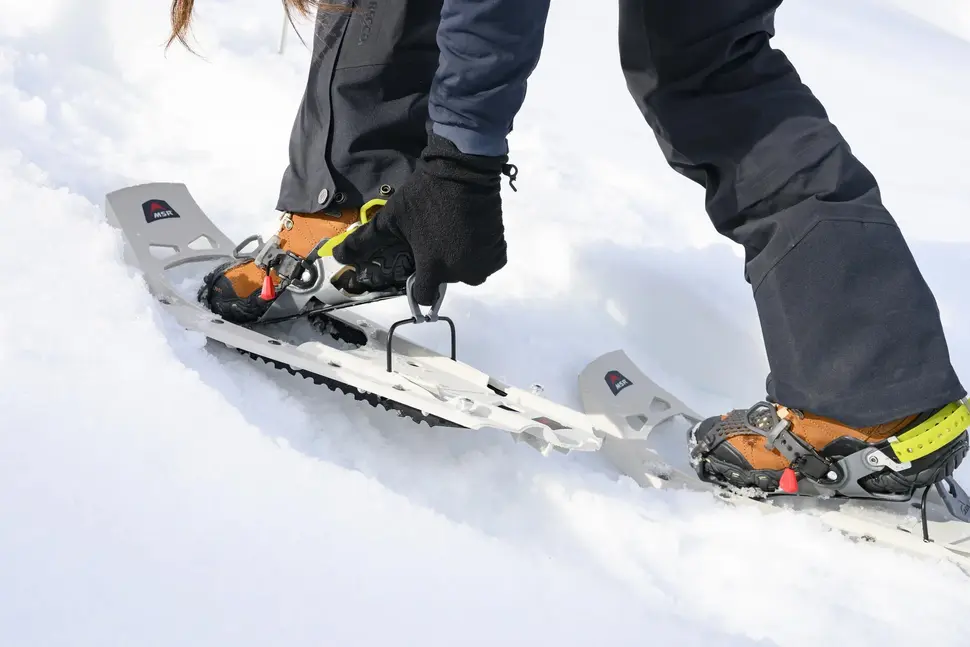
Advanced Binding Systems: Backcountry bindings accommodate technical mountaineering boots with precise, secure attachment that won't loosen during aggressive use. The systems allow fine-tuning and remain functional with frozen components or when wearing gloves—critical in extreme conditions.
Climbing Bars (Heel Lifts): All serious backcountry snowshoes include deployable heel lifts that reduce calf strain on extended ascents. These climbing bars lift your heel 2-3 inches, making steep climbs far less exhausting by reducing the angle your ankle flexes. Multiple positions allow adjustment for varied slope angles.
Modular Flotation: Many backcountry snowshoes feature attachment points for optional tail extensions that increase flotation by 5-8 inches, allowing adaptation to extreme powder conditions without requiring separate snowshoes.
Durable Construction: Reinforced frames, backed-up attachment points, and overbuilt components ensure reliability when failure would mean serious problems. The increased durability comes with weight and cost premiums that backcountry users accept for peace of mind.
Ideal Applications for Backcountry Snowshoes
Mountain Travel: Accessing peaks, ridges, and alpine terrain requires the traction and climbing capability that only backcountry snowshoes provide. Technical routes with sustained steep sections demand equipment that won't limit your objectives or compromise safety.
Deep Powder Exploration: Venturing into wilderness areas immediately after snowfall means breaking trail through deep, unconsolidated snow. Backcountry snowshoes' larger surface areas provide flotation that recreational models cannot match, turning exhausting slogs into manageable travel.
Winter Camping and Extended Trips: Multi-day trips carrying heavy packs with camping gear, food, and safety equipment require snowshoes rated for 220-280+ pound total loads. Backcountry snowshoes accommodate these heavy loads while maintaining adequate flotation and durability.
Variable Terrain: Routes that transition between flat approaches, steep ascents, traverses, and descents demand versatile snowshoes that handle all conditions. The comprehensive feature sets of backcountry models provide confidence across terrain variety that would overwhelm recreational alternatives.
Avalanche Terrain: Any snowshoeing in avalanche-prone areas demands backcountry snowshoes compatible with ski crampons and designed for potential self-arrest situations. The aggressive traction helps if you need to quickly traverse avalanche-risk slopes or execute emergency maneuvers.
Guided Adventures: Snowshoe tours into serious terrain typically require or recommend backcountry-rated snowshoes that match the objectives and ensure all participants have adequate equipment for the planned routes.
Investment Considerations
Backcountry snowshoes typically cost $250-$450, reflecting their advanced materials, construction, and capabilities. This premium pricing represents significant investment that demands honest assessment of whether you'll utilize the technical features enough to justify costs. The MSR Lightning Ascent, Revo Ascent, and similar technical models occupy this premium tier with good reason—they're built for demanding use that would quickly destroy recreational alternatives.
Making the Right Choice for Your Adventures
Honest Assessment of Your Snowshoeing Style
The key to selecting between recreational and backcountry snowshoes lies in honest self-assessment about your actual snowshoeing habits rather than aspirational plans. Consider these questions:
Where do you actually snowshoe? If you primarily visit groomed trail systems, state parks, and established routes near towns, recreational snowshoes likely suit your needs. If you regularly venture into untracked wilderness, backcountry models become essential.
What terrain do you encounter? Flat to moderate rolling terrain rarely demands backcountry capabilities. Steep mountains, technical ridges, and aggressive routes require technical equipment.
How often do you snowshoe? Occasional winter walkers (2-6 times per season) often find recreational snowshoes adequate. Frequent users (20+ days per season) who develop skills and venture into varied terrain benefit from backcountry capabilities.
What's your fitness level? Less athletic individuals and those new to winter recreation often appreciate recreational snowshoes' lighter weight and simpler operation. Fit, experienced adventurers who push limits need equipment that won't hold them back.
Do you carry heavy loads? Day trippers with small packs rarely need backcountry flotation. Winter campers, photographers, and anyone carrying substantial gear require equipment rated for heavy total loads.
The Progressive Approach
Many snowshoers start with recreational models to explore whether they enjoy the activity enough to justify premium equipment investment. This progressive approach makes sense—recreational snowshoes provide adequate performance for learning fundamentals and exploring maintained trails while you develop skills and interests.
As your experience grows and objectives become more ambitious, limitations emerge naturally. You'll recognize when recreational snowshoes no longer support your goals, creating organic motivation to upgrade to backcountry models. This progression ensures your equipment matches your actual development rather than purchasing advanced gear you're not ready to utilize.
The Two-Snowshoe Solution
Serious snowshoe enthusiasts who pursue varied objectives often maintain both recreational and backcountry snowshoes, using each for appropriate applications. Keep recreational models for quick fitness outings on local packed trails where light weight and simplicity matter more than technical performance. Reserve backcountry snowshoes for ambitious mountain objectives where their capabilities prove essential.
This approach maximizes equipment lifespan by using each tool for its intended purpose rather than forcing compromise. The recreational snowshoes handle easy terrain without excessive weight, while backcountry models tackle serious routes without worrying about inadequate equipment.
Hybrid and Crossover Options

All-Terrain and Versatile Models
Some snowshoe manufacturers offer hybrid designs attempting to bridge recreational and backcountry categories. These all-terrain or crossover snowshoes feature moderate-duty traction systems, basic climbing bars, and construction that's more robust than recreational models but lighter than full backcountry designs.
These compromises suit snowshoers whose adventures span both categories—sometimes groomed trails, sometimes moderate backcountry terrain, but rarely extreme conditions in either direction. The MSR Lightning Explore series represents this middle ground with technology from their technical lines in more accessible packages.
Hybrid models work well for versatile users but involve compromises. They're heavier and more complex than recreational alternatives on easy terrain while lacking the ultimate performance of true backcountry models on technical routes. For snowshoers with clearly defined needs at either extreme, purpose-built equipment serves better than compromises.
Safety Considerations
When Inadequate Equipment Creates Danger
Using recreational snowshoes on terrain exceeding their capabilities creates genuine safety concerns. Inadequate traction on steep, exposed slopes can lead to uncontrolled slides resulting in injury. Insufficient flotation in deep snow causes extreme exhaustion that might prevent you from returning to trailheads before darkness or weather deterioration. Binding failures in remote locations can strand you miles from help.
If your planned route involves significant exposure, steep terrain, or remote wilderness, backcountry snowshoes transition from preference to necessity. Don't compromise safety by using inadequate equipment to save money or weight—the consequences of equipment failure in serious terrain far exceed the costs of appropriate gear.
Climate and Regional Considerations
Matching Equipment to Local Conditions
Different regions create varied demands on snowshoe equipment:
Maritime Climates: Wet, heavy snow in coastal and maritime regions packs naturally, often allowing recreational snowshoes to perform adequately even in less-maintained areas. The Pacific Northwest, coastal Maine, and similar regions create conditions where flotation demands are less extreme.
Continental Climates: Dry, light powder in Rocky Mountain, interior, and high-elevation regions requires maximum flotation. Recreational snowshoes quickly prove inadequate in deep Colorado or Montana powder even on moderate terrain.
Variable Conditions: Regions with inconsistent snow—sometimes powder, sometimes crust, sometimes ice—demand versatile equipment. Backcountry snowshoes' comprehensive traction systems handle the variable surfaces that frustrate recreational models.
Consider your local and typical travel conditions when selecting equipment. What works in one region might prove inadequate in another despite similar terrain profiles.
Conclusion
The choice between recreational and backcountry snowshoes ultimately reflects honest assessment of your actual winter adventures, terrain preferences, and performance requirements. Recreational snowshoes provide excellent value and performance for groomed trails, casual outings, and moderate terrain, delivering comfort and accessibility that introduce countless people to winter recreation. Backcountry snowshoes offer technical capabilities essential for serious mountain travel, deep powder exploration, and demanding routes where equipment limitations create frustration or danger.
Neither category is universally superior—each excels within its intended applications while proving inadequate outside those boundaries. The best snowshoe for you is the one that matches where and how you actually snowshoe rather than how you imagine snowshoeing in aspirational moments. By thoughtfully considering your genuine needs, you'll select equipment that enhances rather than limits your winter adventures.
Ready to find the perfect snowshoes for your winter exploration style? Browse our comprehensive collection of snowshoes at Alpenglow Adventure Sports, featuring both recreational and backcountry options from trusted brands like MSR. Our knowledgeable staff—mountain specialists since 1986—helps you honestly assess your needs and select snowshoes that will deliver optimal performance, safety, and enjoyment across your actual adventures. Get your gear to go and get outside to explore Maine's beautiful winter landscapes with confidence!