How to Choose the Right Ski Pole Length: A Complete Sizing Guide
Choosing the correct ski pole length might seem like a minor detail compared to selecting skis or boots, but properly sized poles significantly impact your balance, rhythm, and efficiency on the mountain. Whether you're carving groomers at the resort, exploring the backcountry, or progressing through terrain parks, the right pole length enhances your skiing performance and reduces fatigue.
This comprehensive guide will walk you through everything you need to know about ski pole sizing, from basic measurement techniques to discipline-specific recommendations that will help you find the perfect fit.
Why Ski Pole Length Matters
Ski poles serve multiple crucial functions during your time on the mountain. They help maintain balance through variable terrain, provide timing and rhythm for turn initiation, assist with propulsion on flat sections, and offer support when navigating challenging conditions.
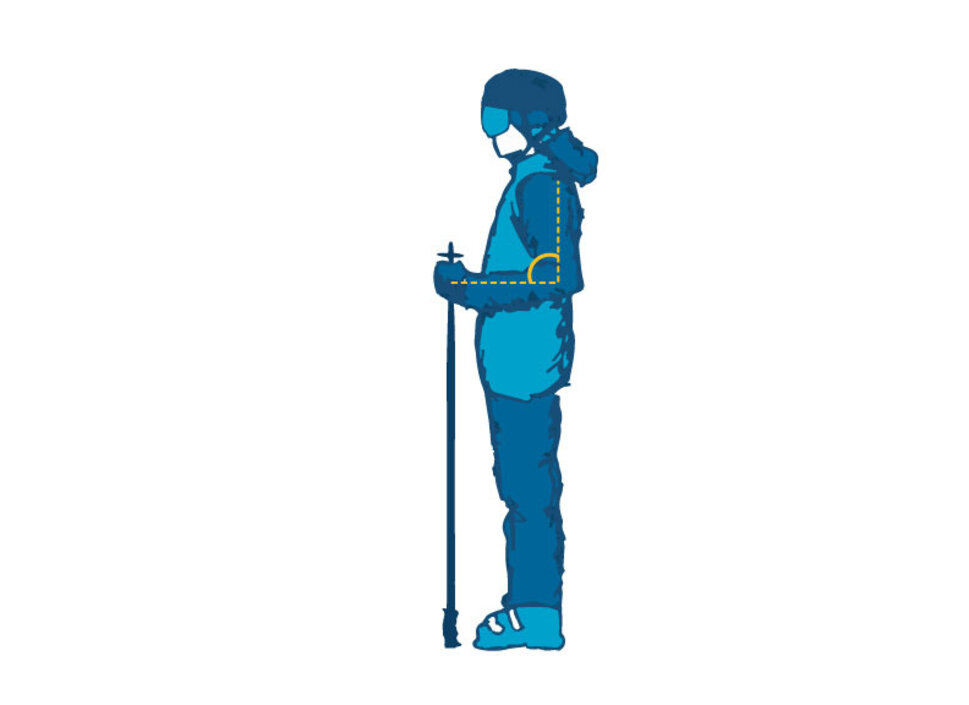
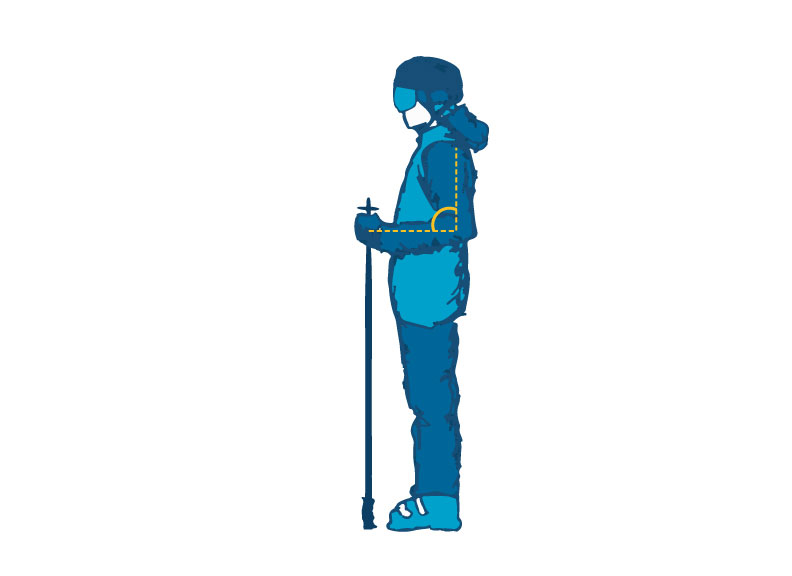
When your poles are the correct length, your arms naturally bend at approximately 90 degrees when you plant them, creating optimal leverage and minimizing arm fatigue. This positioning allows for efficient energy transfer whether you're pushing through a flat section or timing your pole plant for a carved turn.
Poles that are too long force you into an awkward, upright stance with limited forward motion capability. You'll find yourself lifting your arms excessively high, which throws off your balance and disrupts proper skiing form. Long poles also tend to get stuck in the snow during turns, creating drag and interfering with smooth technique.
Conversely, poles that are too short prevent you from achieving proper forward lean and adequate push-off leverage. You'll notice increased back strain from hunching forward, reduced ability to generate power on flat terrain, and compromised balance in technical situations.
The 90-Degree Rule: The Standard Sizing Method
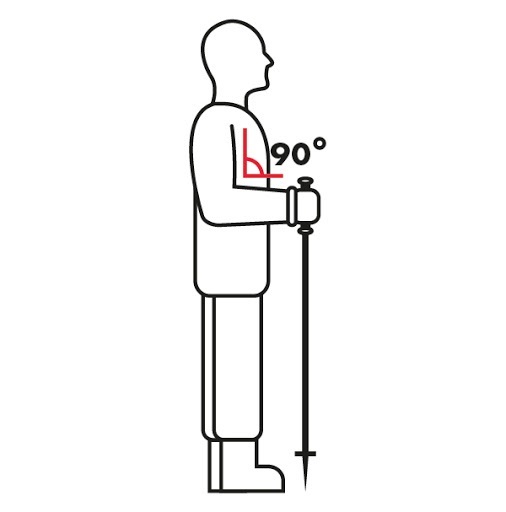
The most reliable way to determine your ideal ski pole length is the time-tested 90-degree rule. This simple method works for all types of alpine skiing and provides an excellent starting point for most skiers.
How to Perform the 90-Degree Test
Stand upright in your ski boots (or shoes with similar heel lift if boots aren't available). Turn the ski pole upside down so the grip is touching the floor and the tip points toward the ceiling. Grab the pole shaft directly beneath the basket with your thumb touching the top edge of the basket.
When the pole is the correct length, your forearm will be parallel to the ground and your elbow will form a 90-degree angle. Your elbow should rest comfortably at your side without your shoulder being raised or your arm extended awkwardly.
If your elbow angle is less than 90 degrees (more acute), the pole is too long for you. If the angle is greater than 90 degrees (more obtuse), you need a longer pole. Most ski poles are sold in 5-centimeter (roughly 2-inch) increments, so you'll want to find the size that gets you closest to that perfect 90-degree benchmark.
The Measurement Method Without Poles
If you don't have access to ski poles when sizing, you can use a tape measure to estimate your ideal length. Stand in your ski boots with your elbow bent at 90 degrees and your forearm extended straight out in front of you. Measure from your hand down to the ground, then add approximately 5 centimeters (2 inches) to account for the portion of the pole that penetrates the snow when planted.
This calculation provides a solid baseline, though we recommend verifying with the upside-down pole test when possible, as individual arm proportions and skiing styles can influence the ideal length.
Ski Pole Length Chart by Height

While the 90-degree rule provides the most accurate sizing, the following chart offers quick reference guidelines based on skier height. These recommendations apply to standard all-mountain and resort skiing.
Height (feet/inches) → Pole Length (cm)
- 4'0" - 4'2" → 85 cm
- 4'3" - 4'5" → 90 cm
- 4'6" - 4'8" → 95 cm
- 4'9" - 4'11" → 100 cm
- 5'0" - 5'2" → 105 cm
- 5'3" - 5'5" → 110 cm
- 5'6" - 5'8" → 115 cm
- 5'9" - 5'11" → 120 cm
- 6'0" - 6'2" → 125 cm
- 6'3" - 6'5" → 130 cm
- 6'6" - 6'8" → 135 cm
- 6'9" and taller → 140 cm
Remember that these are general guidelines. Your ideal length may vary based on arm length relative to your height, skiing style, and personal preference. Always use the 90-degree test as your primary sizing tool.
Adjusting Length for Different Skiing Disciplines
While the 90-degree rule works well for all-mountain skiing, different disciplines benefit from specific length adjustments that optimize performance for their unique demands.
All-Mountain and Resort Skiing
For general resort skiing across varied terrain, stick with the standard 90-degree sizing. This versatile length handles groomers, bumps, trees, and occasional powder with equal competence. If you find yourself between two sizes, many experienced skiers prefer going slightly shorter for enhanced maneuverability and a more aggressive forward stance.
Powder Skiing
Deep snow conditions benefit from slightly shorter poles than your standard length—typically 5 centimeters less than your all-mountain measurement. In deep powder, long poles require excessive lifting with each turn, leading to significant arm fatigue. Shorter poles stay higher in the snowpack and reduce the effort needed to initiate turns, keeping your upper body relaxed and your focus on floating through the deep stuff.
Terrain Park and Freestyle Skiing
Park skiers should consider going at least one full size shorter (5-10 centimeters) than standard measurements. Shorter poles reduce interference during aerial maneuvers, spins, and rail slides. Many advanced park skiers go even shorter or eliminate poles entirely for maximum freedom during tricks. The reduced pole length prevents catching on halfpipe walls and allows for cleaner grabs and rotations.
Racing and High-Speed Skiing
Racers typically use different pole lengths depending on their discipline. Slalom racers often prefer slightly shorter poles that accommodate the lower, more aggressive body position required for tight, rapid turns. Giant slalom, super-G, and downhill racers use longer poles for stronger push-off in the starting gate and improved aerodynamics during tucked high-speed sections.
Mogul Skiing
Bump skiers generally stick with standard 90-degree sizing or go slightly shorter. The rapid, rhythmic pole plants characteristic of mogul skiing benefit from poles that don't interfere with quick upper body movements. Shorter poles also reduce the chance of getting hung up between bumps.
Backcountry and Ski Touring: Special Considerations
Backcountry skiing presents unique challenges that make pole selection more complex than resort skiing. The varying demands of ascending and descending terrain mean that a single fixed length often compromises performance in one direction or the other.
The Uphill vs. Downhill Challenge
During uphill travel (skinning), you need longer poles to generate efficient propulsion and maintain balance on steep slopes. The extended length allows you to use your upper body effectively, engaging core and arm muscles to assist leg power. Longer poles also provide better stability when making kick turns on steep skin tracks.
For the descent, you'll want poles closer to your standard downhill skiing length or even shorter if tackling steep couloirs and technical terrain. This shorter length keeps your hands forward in an athletic stance and prevents poles from catching in deep snow behind you.
Adjustable Poles: The Backcountry Standard
Most dedicated backcountry skiers choose telescoping adjustable poles that can be lengthened for ascents and shortened for descents. Quality two-section telescoping poles typically offer 20-40 centimeters of adjustment range, while three-section models can provide even more versatility.
When selecting adjustable poles for backcountry use, ensure the adjustment range includes both your preferred uphill length (generally 5-10 centimeters longer than your standard downhill measurement) and your downhill length. For example, if your ideal resort pole is 120 centimeters, look for adjustable poles with a range spanning approximately 115-135 centimeters.
Fixed Poles with Extended Grips
Some backcountry skiers prefer fixed-length poles with extended foam grips that allow you to "choke up" by gripping lower on the shaft when ascending steep terrain. This approach offers the durability and simplicity of fixed poles while still accommodating varied terrain angles.
When using this technique, choose a fixed pole length at your standard downhill measurement. The extended grip (typically 15-20 centimeters of foam or rubber below the main grip) allows you to effectively shorten the pole by 5-10 centimeters when needed during climbs or traverses.
Length Recommendations for Ski Touring
For backcountry skiing with adjustable poles, set your uphill length so your arms are at approximately 90 degrees when poles are planted on moderate slopes. For steep ascents, you may want to extend them even further to maintain efficient leverage. On long, flat approaches where you're skating or double-poling, Nordic-length poles (significantly longer) can save considerable energy.
For descents, shorten your poles to standard downhill length or slightly shorter for steep, technical terrain. This ensures proper weight distribution and allows for aggressive, controlled skiing in challenging conditions.
Cross-Country Skiing Pole Lengths
Cross-country skiing uses significantly different pole lengths than alpine skiing because the poles play a much more active role in propulsion rather than just balance and timing.
Classic Cross-Country Skiing
For traditional diagonal stride technique on groomed tracks, poles should reach approximately to your shoulder or slightly higher—around armpit height when standing in your ski boots. The general formula is your height in centimeters multiplied by 0.83.
Recreational and touring cross-country skiers may prefer slightly shorter poles (by 2-5 centimeters) for reduced shoulder stress and easier handling in varied terrain. Racing and performance-oriented classic skiers often go 2-5 centimeters longer for maximum power generation during double-poling sections.
Skate Skiing
Skate skiing requires longer poles than classic technique because the poles provide much of the forward propulsion. Poles should reach somewhere between your chin and nose, or approximately to ear height. The formula is your height in centimeters multiplied by 0.89.
Strong skiers with excellent technique may go even longer for increased power output, but this places additional stress on shoulders and requires proper conditioning to avoid injury.
Special Sizing Situations
Children and Growing Skiers
When buying poles for kids, resist the temptation to buy oversized poles they'll "grow into." Improperly sized poles negatively impact skill development and can lead to bad habits that are difficult to correct later.
Consider adjustable poles for children experiencing growth spurts. These allow you to dial in the correct length as they grow, providing better value than repeatedly purchasing new fixed-length poles every season.
Between Sizes: Which Way to Go?
When you find yourself perfectly between two pole sizes, the conventional wisdom is to choose the shorter option. Slightly shorter poles are easier to adapt to than slightly longer poles, and they encourage a more athletic, forward stance. Poles that are a bit too long are more likely to cause balance issues and interfere with proper technique.
The exception is for dedicated backcountry skiers who can benefit from the extra length during uphill travel. In this case, if using fixed poles, lean toward the longer option and use extended grip techniques to effectively shorten them when needed.
Arm Length Variations
Some skiers have longer or shorter arms relative to their height, which can affect ideal pole length. The 90-degree test naturally accounts for these variations, which is why it's more accurate than height-based charts alone. If you know you have unusually long or short arms for your height, pay extra attention to the 90-degree measurement rather than relying solely on size charts.
Verifying Your Pole Length On-Snow
Once you have new poles, take them for a test run to verify the fit feels right in actual skiing conditions. Pay attention to these indicators:
Your pole plants should feel natural and require minimal extra reaching or arm lifting. When traversing across the slope, you shouldn't feel like you're straining to reach the snow on the uphill side or awkwardly pulling your arm up on the downhill side. During turns, pole timing should flow smoothly without poles getting stuck or requiring excessive force to pull from the snow.
In lift lines and while skating on flat terrain, you should be able to push effectively without excessive bending or uncomfortable arm extension. After a full day of skiing, your shoulders and arms shouldn't feel unusually fatigued (beyond normal muscle use from skiing).
If something feels off, don't hesitate to make adjustments. Many shops can cut down poles that are slightly too long, though be aware that this is a permanent modification. For adjustable poles, experiment with different lengths in various terrain until you find your ideal setting.
Making Length Adjustments: Can Poles Be Modified?
Fixed-length poles can be shortened if needed, though this process is permanent and should be done carefully. Aluminum poles are easier to modify than carbon fiber, which can splinter or crack if not cut properly with the right tools. Most ski shops offer pole cutting services and can ensure the job is done correctly.
However, poles cannot be lengthened if you determine they're too short. This is another good reason to lean toward slightly longer poles if you're uncertain, as they can always be shortened but never extended.
For adjustable poles, familiarize yourself with the adjustment mechanism and practice changing lengths quickly. You'll want this to be second nature when touring in the backcountry where conditions change rapidly.
Additional Factors Beyond Length
While length is crucial, don't overlook other important pole features that affect performance and comfort:
Grip Design: Extended foam grips are essential for backcountry use and helpful for all-mountain skiing. Look for ergonomic shapes that feel comfortable in your hand with gloves on.
Basket Size: Standard baskets (approximately 5 centimeters diameter) work for most resort conditions. Larger powder baskets (8-10 centimeters) are necessary for deep snow and backcountry skiing. Many poles come with interchangeable baskets for different conditions.
Shaft Material: Aluminum is durable and economical, while carbon fiber is lighter but more expensive and potentially less durable in harsh impacts. Composite materials offer middle-ground options.
Strap Design: Adjustable, padded straps improve comfort on long days. Some backcountry-specific straps feature quick-release mechanisms for safety in avalanche terrain.
Getting the Right Poles at Alpenglow Adventure Sports
Now that you understand how to size ski poles correctly, you're ready to find the perfect pair for your skiing adventures. Whether you need fixed-length resort poles, adjustable backcountry poles, or specialized racing poles, proper sizing ensures optimal performance and comfort on every run.
At Alpenglow Adventure Sports, we carry a carefully curated selection of ski poles from trusted brands that have proven themselves in real mountain conditions. Our experienced staff understands the nuances of pole selection and can help you find the ideal length and style for your specific needs.
Browse our complete collection online or visit our shop to work with gear experts who live and breathe mountain sports. We'll help you perform the 90-degree test with different models, discuss the specific demands of your favorite terrain, and ensure you leave with poles that enhance your skiing rather than hindering it.
The right ski poles might seem like a small detail, but they make a significant difference in your performance, endurance, and enjoyment on the mountain. Take the time to get the sizing right, and you'll notice the improvement from your very first run.