Active vs. Passive Protection: When to Use Cams, Nuts, and Tricams
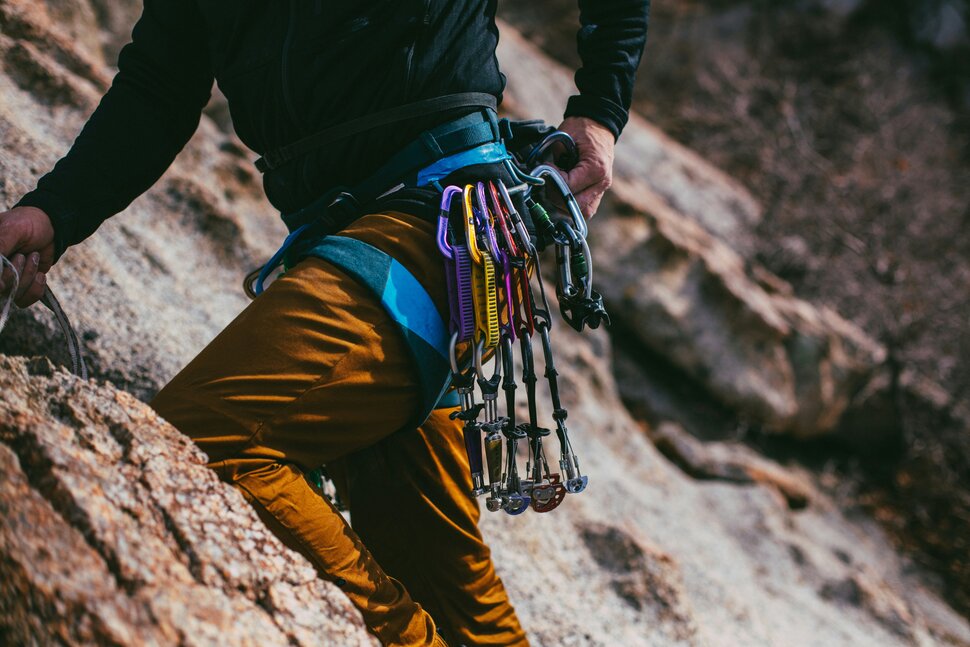
One of the most critical skills in traditional climbing is knowing which type of protection to place in any given situation. While sport climbers simply clip bolts, trad climbers must assess rock features, crack characteristics, and potential fall dynamics to select the optimal piece of gear. Understanding the fundamental differences between active and passive protection—and knowing when each type excels—separates confident, efficient trad climbers from those who struggle with gear selection and placement quality.
This comprehensive guide explores the mechanics, applications, advantages, and limitations of active protection (cams) versus passive protection (nuts, stoppers, and Tri-Cams). Whether you're transitioning from sport climbing, building your first trad rack, or looking to refine your protection placement skills, mastering these concepts will make you a safer, more competent traditional climber.
Understanding Active Protection: Spring-Loaded Camming Devices
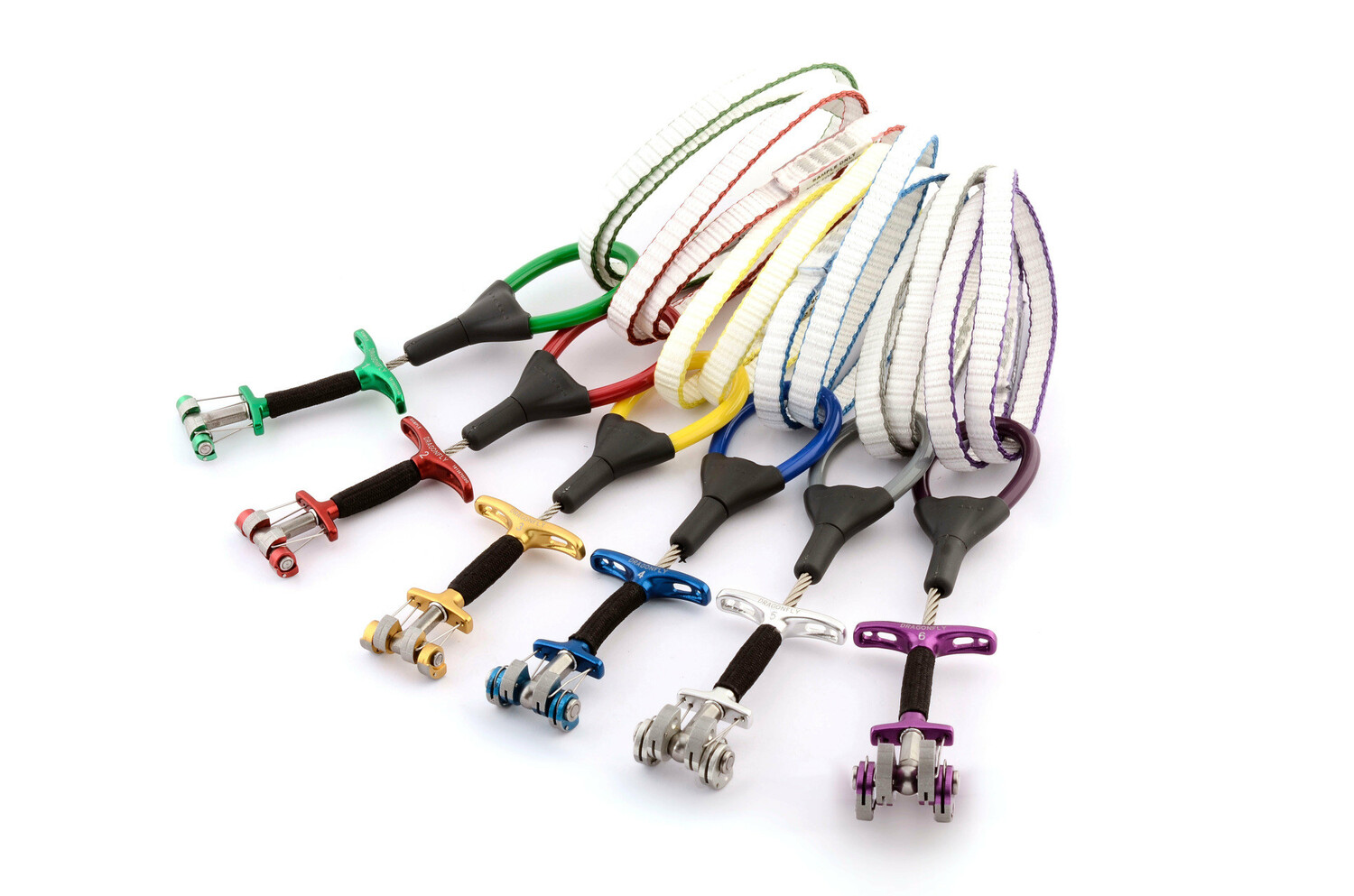
Active protection refers to gear that uses mechanical components to create holding power. The most common type is the spring-loaded camming device (SLCD), commonly called "cams."
How Cams Work: The Mechanics
Cams use three or four curved lobes attached to a central axle, with springs that push the lobes outward. When you pull the trigger, the lobes retract, allowing you to insert the cam into a crack. Release the trigger, and the springs force the lobes against the rock walls, creating friction through outward pressure.
The genius of cam design lies in the constant angle principle. As you weight the cam, the lobes try to rotate around the axle, which pushes them outward with even greater force. This creates a self-reinforcing system where increased load generates proportionally increased holding power—up to the cam's rated strength limit.
Modern cams like the Black Diamond Camalot C4 ($94.95), DMM Dragon ($84.95), and Wild Country Friend ($79.95) available at Alpenglow's climbing hardware collection have refined this design over decades, offering reliability that most climbers trust with their lives.
Advantages of Active Protection
Speed of Placement: Cams place quickly, requiring just seconds to size up a crack, pull the trigger, insert the device, and release. This speed is invaluable when you're pumped, the climbing is sustained, or you need to establish protection rapidly in a precarious position.
Parallel-Sided Cracks: Cams excel in parallel cracks where passive protection would simply slide through. The spring-loaded mechanism creates outward force regardless of crack shape, making cams versatile in features where nuts won't work.
Range of Sizes: Each cam covers a significant range of crack widths—typically about a 40-60% expansion ratio. A #1 Black Diamond Camalot, for example, works in cracks from approximately 1.4 to 2.4 inches. This range means you need fewer individual pieces to cover the same span of crack sizes compared to passive protection.
Confidence and Psychological Security: There's something reassuring about the audible "click" of cam lobes setting against rock and the visual confirmation of proper placement. For many climbers, especially those new to trad climbing, cams provide greater psychological confidence than passive gear.
Multi-Directional Loading: Quality cams handle upward, downward, and outward forces reasonably well (though they're rated for outward loading primarily). This versatility matters in horizontal cracks, roofs, and situations where load direction might shift.
Work in Flaring Cracks: While not ideal, cams can work in slightly flaring cracks where passive protection would be dangerous or impossible. The springs maintain contact even as crack width increases.
Disadvantages of Active Protection
Weight: Cams are significantly heavier than comparable passive protection. A medium cam weighs 80-120 grams, while a nut providing similar protection might weigh 40-60 grams. When carrying a double rack (two of each size), this weight difference compounds.
Cost: Cams are expensive, typically $75-110 per unit for standard sizes. Building a complete cam rack represents a significant investment of $600-1,200 or more, compared to $110-145 for a complete set of nuts.
Durability Concerns: Cams have moving parts—springs, triggers, axles—that can fail, freeze, or malfunction. Sand, dirt, and ice can compromise function. While rare, mechanical failure is more likely with active protection than passive pieces.
Walking: In horizontal placements or when subjected to rope drag, cams can "walk" deeper into cracks, potentially lodging in positions where they're difficult to clean or, worse, becoming less secure.
Limited in Shallow Placements: Cams need sufficient crack depth for the lobes to engage properly. In shallow cracks, pockets, or behind flakes, passive protection is often superior.
Placement Sensitivity: While cams are faster to place than nuts, they require proper placement technique. Over-camming (placing with lobes too retracted), under-camming (insufficient lobe contact), or placing with lobes walking toward wider sections can all compromise security.
Understanding Passive Protection: Nuts, Stoppers, and Hexes
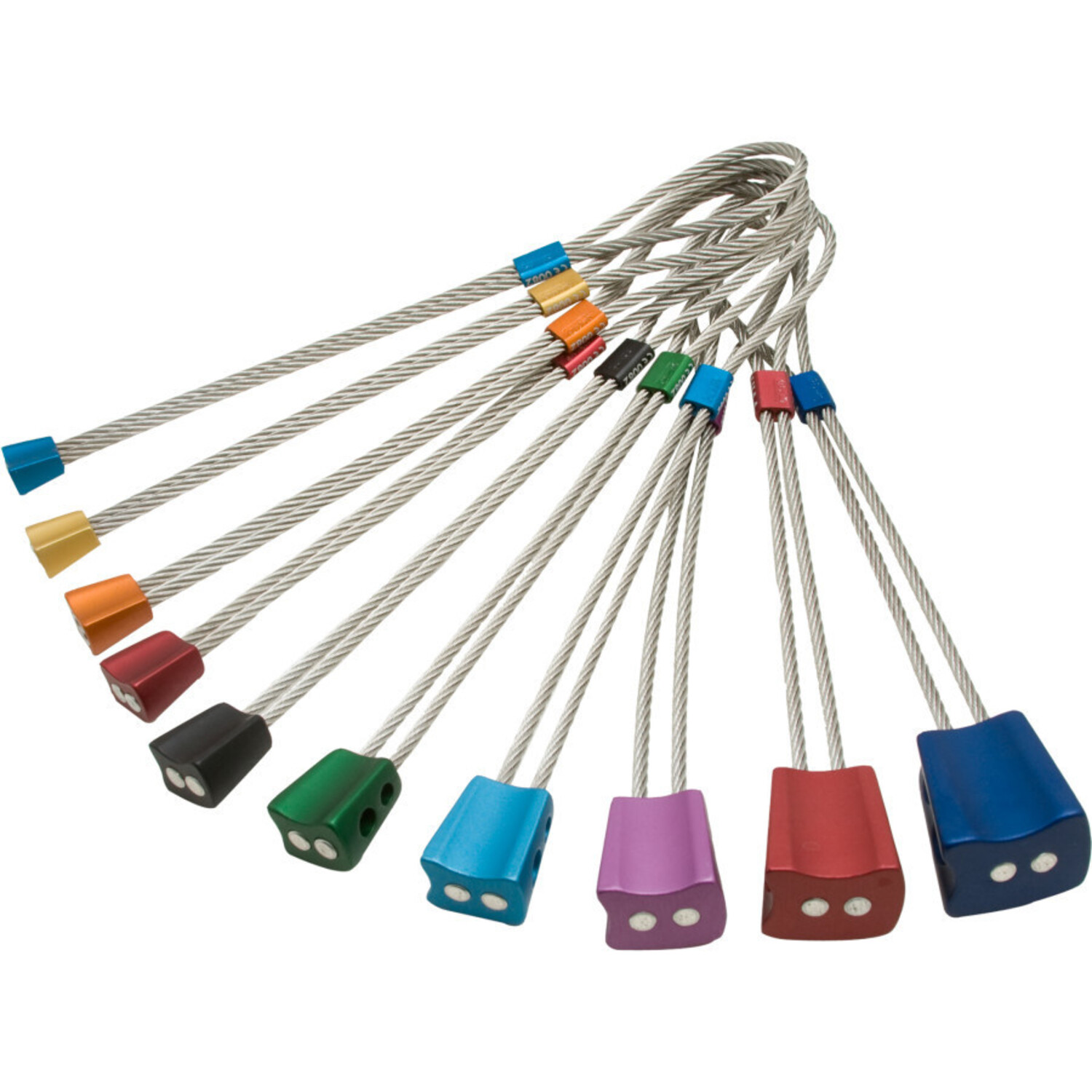
Passive protection uses no moving parts, relying instead on geometric shapes that wedge into constrictions or lodge behind features in cracks.
How Passive Protection Works: The Mechanics
Passive gear works through simple physics. A tapered wedge inserted into a tapering crack can't pull through the constriction when loaded. The force of a fall attempts to pull the nut downward and outward, but the taper and rock constriction prevent movement. The nut converts downward force into outward pressure against the rock walls, creating a secure placement.
Standard nuts like DMM Wallnuts ($13.50) and Black Diamond Stoppers feature asymmetric tapers, allowing them to seat in various crack profiles. The curved faces help them rotate into optimal positions, while the wire cable flexes to accommodate different placement angles.
Advantages of Passive Protection
Lightweight: Passive protection is exceptionally light. A complete set of nuts (10-13 pieces) weighs approximately 300-400 grams total, less than four medium cams. For alpine climbing, long routes, or any situation where weight matters, nuts are invaluable.
Inexpensive: A complete set of standard nuts costs $110-145, providing comprehensive coverage across small to medium crack sizes. This affordability allows climbers to build protective systems without breaking the bank.
Bombproof When Well-Placed: A properly placed nut in a constriction is as secure as any protection device. Without moving parts to fail, passive gear offers ultimate simplicity and reliability. Many climbers consider well-placed nuts more trustworthy than cams.
No Moving Parts: Passive protection can't malfunction mechanically. There are no springs to break, triggers to stick, or axles to seize. This simplicity means passive gear works reliably in harsh conditions—cold, wet, sandy, or icy environments where cams might struggle.
Excellent for Shallow Placements: Thin cracks, flaring placements behind flakes, and shallow pockets often accommodate passive protection better than cams. A nut might work in a feature barely deep enough for the metal wedge, where cam lobes couldn't engage sufficiently.
Won't Walk: Once properly set, passive protection stays put. Unlike cams that can walk in horizontal placements, a well-seated nut isn't going anywhere until you clean it.
Long Lifespan: Without mechanical components to wear out, passive protection lasts indefinitely if not damaged. Many climbers use the same set of nuts for decades.
Disadvantages of Passive Protection
Slower Placement: Finding the right nut size, orienting it correctly, and setting it in a constriction takes more time than placing a cam. When you're fatigued or in challenging positions, this time matters.
Requires Constrictions: Passive protection needs tapering cracks or distinct constrictions to work. In parallel-sided cracks—common in many climbing areas—nuts simply won't seat securely.
Limited Range Per Piece: Each nut works across a narrow range of crack sizes, perhaps a few millimeters. This means you need more individual pieces to cover the same span that one cam could protect. A complete nut set has 10-13 pieces, while 6-8 cams might cover similar terrain.
Directional Loading: Passive protection works primarily for downward loading. Horizontal cracks, roofs, or situations where upward forces are possible require careful assessment or alternative protection.
Learning Curve: Evaluating nut placements requires more skill and experience than placing cams. Understanding what makes a placement solid versus marginal takes practice and developed judgment.
Can Be Difficult to Clean: Nuts that have held falls or been weighted heavily can seat very tightly. Removing them often requires a nut tool and significant effort, sometimes taking several minutes per piece.
The Hybrid Solution: Tri-Cams
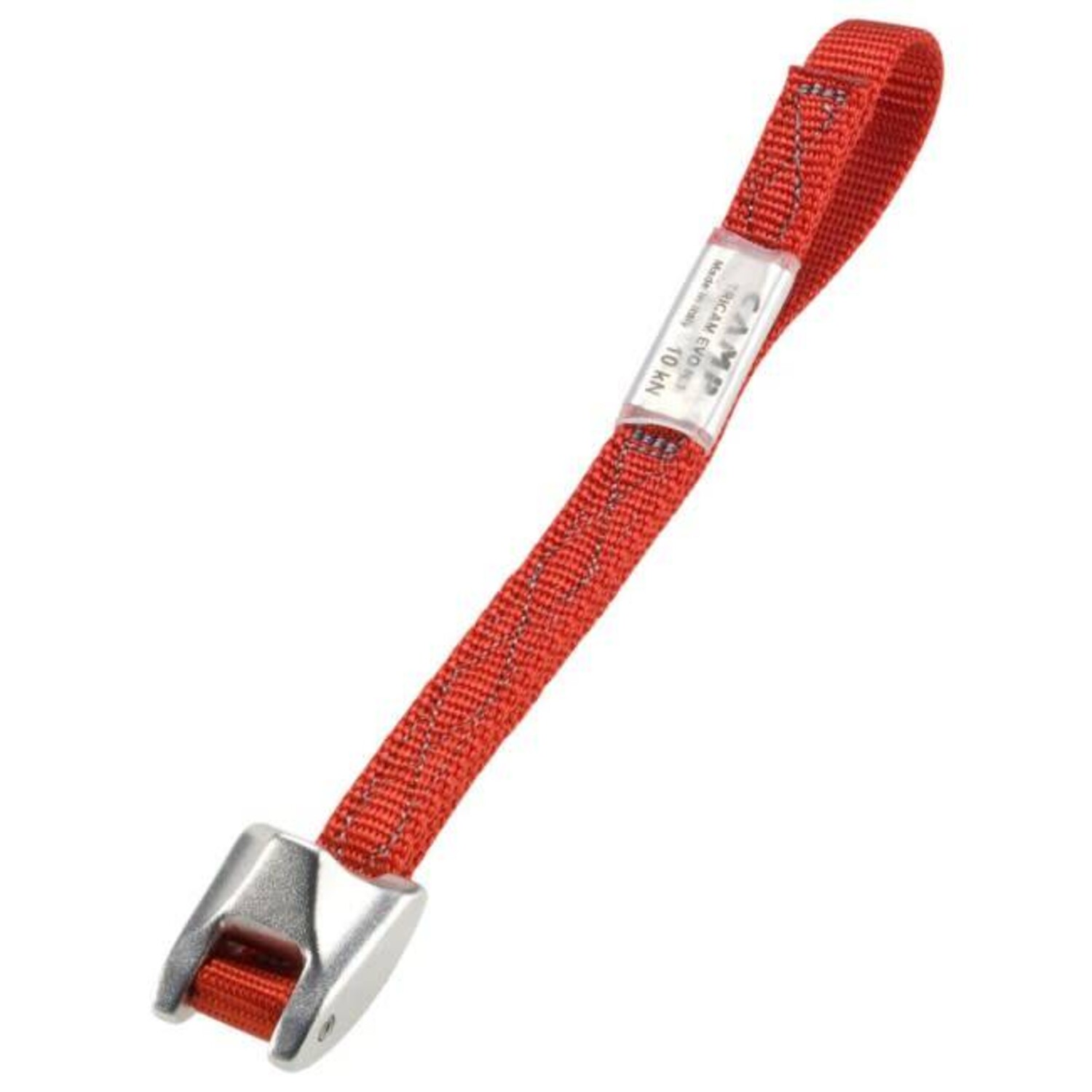
Tri-Cams occupy a unique middle ground between active and passive protection, offering characteristics of both categories.
How Tri-Cams Work
Tri-Cams feature an asymmetric shape with a curved rail and a pointed end. They work through two mechanisms:
- Passive Mode: The pointed end wedges into constrictions like a traditional nut
- Active Mode: The curved rail cams against one crack wall while the pointed end presses against the opposite wall, creating a spring-like holding action without actual springs
CAMP Tri-Cams ($29.95-35.95) are the most popular version of this design and have a devoted following among climbers who understand their applications.
Advantages of Tri-Cams
Versatility: Tri-Cams work in parallel cracks (active mode), constrictions (passive mode), horizontal cracks, pockets, and irregular features where neither cams nor nuts excel.
Lightweight: Tri-Cams weigh significantly less than comparable cams while offering some active protection benefits.
Inexpensive: At $29.95-35.95 per unit, Tri-Cams cost less than half the price of equivalent cams.
Excellent in Pockets: Limestone pockets, solution holes, and irregular features often accept Tri-Cams better than any other protection type.
No Mechanical Parts: Like passive protection, Tri-Cams have no moving parts to fail or require maintenance.
Disadvantages of Tri-Cams
Steep Learning Curve: Tri-Cams have the steepest learning curve of any protection type. Proper placement requires understanding when to use passive versus active mode and how to orient the piece correctly.
Can Be Difficult to Clean: Tri-Cams, particularly when set in active mode and weighted, can be extremely difficult to remove. The curved rail can seat with incredible force.
Less Intuitive: While cams and nuts have fairly obvious placement methods, Tri-Cams require specific techniques that aren't immediately apparent to new users.
Limited Popularity: Compared to cams and nuts, fewer climbers carry Tri-Cams, which means less collective knowledge and beta about optimal usage.
When to Use Each Type: Practical Decision-Making
The best protection placement depends on crack characteristics, rock quality, potential fall factors, and your available gear. Here's how to choose:
Use Cams When:
Parallel-Sided Cracks: This is the quintessential cam placement. If the crack maintains consistent width without constrictions, reach for a cam.
You Need Speed: When you're pumped, in a precarious stance, or on sustained terrain where you need to establish protection quickly, cams are faster.
Horizontal Cracks: While you must guard against walking, cams generally work better than nuts in horizontal placements because they handle multi-directional loading better.
Flaring Cracks: In cracks that widen toward the back, cams can work where nuts would fail. The springs maintain contact even as crack geometry changes.
When You Need Range: If the crack size is between standard nut sizes, a cam's expansion range might bridge the gap perfectly.
Uncertain Rock Quality: In softer rock or when you're unsure about rock integrity, cams distribute load across a larger surface area than nuts' wire cables.
Behind Flakes (With Caution): Cams can work behind flakes where there's sufficient depth for lobe engagement, though you must assess whether the flake itself is solid.
Use Nuts When:
Constrictions Are Available: If the crack narrows or has a distinct constriction, nuts often provide the most bomber protection available.
Shallow Placements: Thin cracks, placements behind flakes, or anywhere with limited depth often accept nuts better than cams.
Pin Scars: Old piton placements create constrictions perfect for nuts, particularly offset nuts.
Weight Is Critical: For alpine routes, long approaches, or big walls where ounces matter, maximize passive protection.
Budget Matters: When building your rack with limited funds, a complete nut set provides comprehensive protection at a fraction of cam costs.
Rock Quality Is Suspect: In fractured or questionable rock, the wire cable of a nut might be safer than cam lobes that could cause rock expansion and failure.
Directly Downward Loading: When load direction is certain to be downward (most vertical placements), nuts work perfectly and offer simplicity.
Behind Flakes (Shallow): For thin placements where only the front edge of rock is available, nuts work better than cams.
Use Tri-Cams When:
Limestone Pockets: Solution pockets in limestone often have irregular shapes perfect for Tri-Cam placements where cams and nuts both struggle.
Horizontal Cracks: Tri-Cams excel in horizontal placements where their active mode creates secure protection without walking concerns.
Pin Scars: Old piton placements, particularly horizontal ones, often accept Tri-Cams beautifully.
Irregular Features: Anywhere the rock feature doesn't conform to standard crack shapes—pockets, solution holes, weird corners—consider Tri-Cams.
Mixed Terrain: On routes combining various crack types and features, Tri-Cams add versatility to your rack.
Combining Active and Passive Protection: Building Complete Systems
Experienced trad climbers carry both active and passive protection, selecting the optimal piece for each placement. Here's how to think about rack composition:
The Balanced Rack Approach
A typical well-rounded rack might include:
- 7-8 cams covering standard sizes (0.3 to 3 in BD sizing)
- Complete set of nuts (10-13 pieces)
- 2-4 Tri-Cams in commonly useful sizes (0.5, 1.0, 1.5, 2.0)
This combination ensures you have appropriate protection for nearly any crack system or rock feature you encounter.
Route-Specific Modifications
Splitter Cracks: Routes following uniform-width cracks benefit from doubled or tripled cams in the appropriate size, with minimal passive gear needed.
Mixed Routes: Face climbing routes with occasional cracks might require a lighter rack emphasizing nuts and small cams.
Limestone Multi-Pitch: Emphasize Tri-Cams and small-to-medium nuts for pocket and irregular feature protection.
Wide Cracks: Large cams (#3-6) become essential, potentially supplemented with large hexes for economical big-crack protection.
Sequential Placement Strategy
When placing protection, consider this decision tree:
- Assess the Feature: Is it a parallel crack, constriction, pocket, or irregular feature?
- Consider Loading: Will forces be downward, multi-directional, or potentially upward?
- Evaluate Depth: Is there sufficient depth for cam lobes or only shallow placement opportunities?
- Account for Your State: Are you pumped and need speed, or can you take time for optimal placement?
- Select Accordingly: Choose the protection type that best matches the situation
Placement Quality: The Real Key to Protection
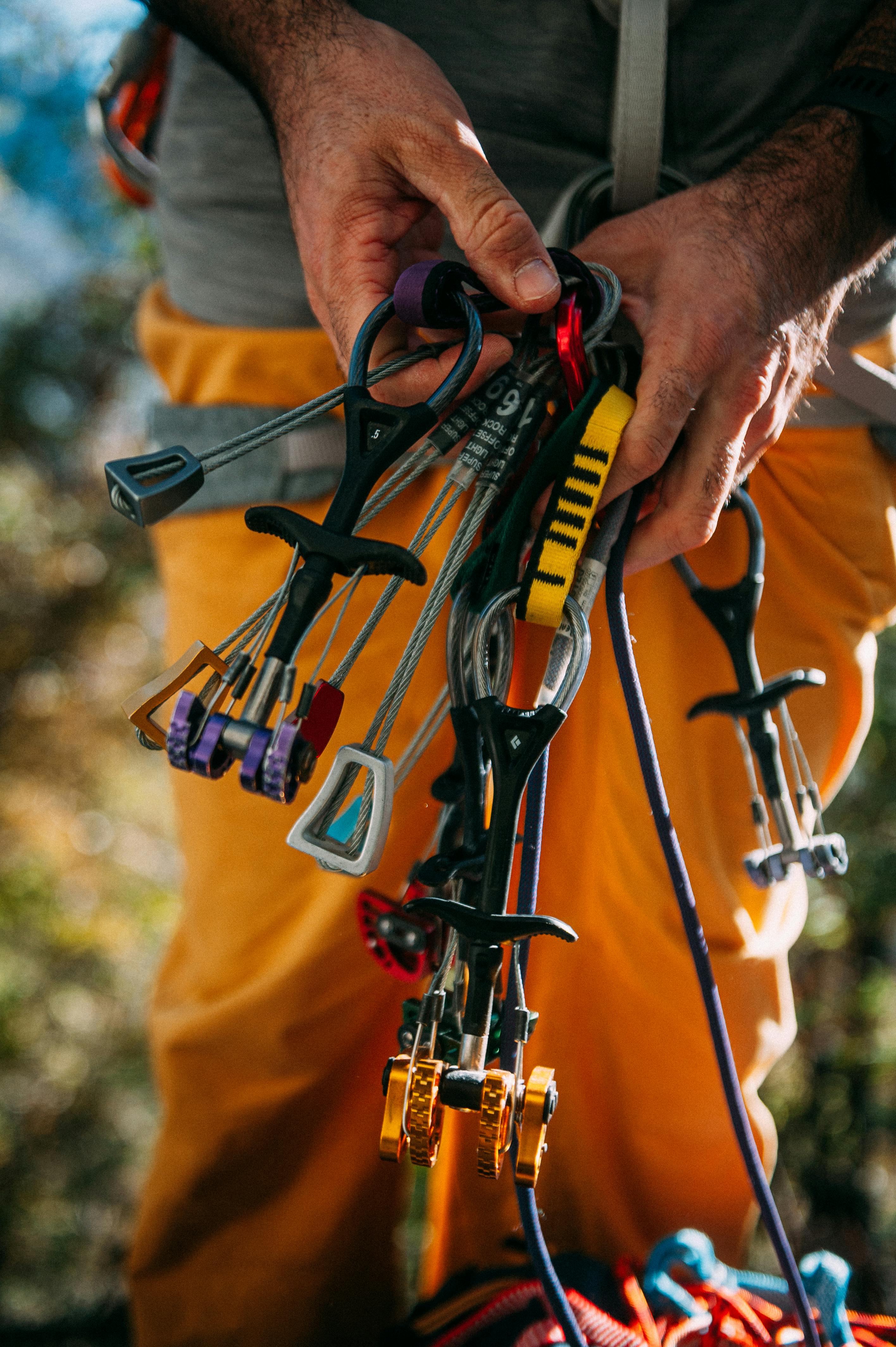
Regardless of whether you choose active or passive protection, placement quality determines security. Here are universal principles:
For Cam Placements
Lobe Contact: Ensure all lobes contact rock, with the cam placed in the middle of its expansion range—not over-cammed (lobes too compressed) or under-cammed (lobes too extended).
Stem Orientation: The stem should align with the anticipated loading direction, typically straight down.
Rock Quality: Place in solid rock, avoiding hollow-sounding sections, loose blocks, or visibly fractured stone.
Walking Assessment: In horizontal placements, assess whether rope drag might cause the cam to walk. Extended placements with slings reduce walking.
For Nut Placements
Constriction Quality: The constriction must be pronounced enough to prevent the nut from pulling through under load.
Multiple Contact Points: Quality placements have three or four contact points between metal and rock.
Setting the Placement: After placing, give the nut a firm downward tug to seat it properly and test security.
Wire Cable Position: Ensure the cable isn't rubbing over sharp edges that could compromise strength.
For Tri-Cam Placements
Mode Selection: Decide whether the placement calls for passive (wedged) or active (camming) mode.
Orientation: Proper orientation is critical—the curved rail must be positioned correctly to engage under load.
Setting: Tri-Cams require firm setting, particularly in active mode, to establish the camming action.
Testing: Test placements thoroughly because Tri-Cams can be deceptively insecure if improperly oriented.
Advanced Considerations: Situations That Demand Specific Protection
Aid Climbing
Active protection dominates modern aid climbing because cams place quickly and work in parallel cracks common on big walls. However, passive gear fills critical roles:
- Small nuts for shallow placements
- Offsets for pin scars
- Tri-Cams for irregular features
Alpine Climbing
Weight considerations make passive protection attractive for alpine routes. Many alpine climbers carry:
- Minimal cams (one set, standard sizes)
- Complete nut set
- Select Tri-Cams
- Ultralight cams (Black Diamond Camalot Ultralight $109.95) when active protection is essential
Winter and Ice Climbing
Cold conditions affect protection choice:
- Cams can freeze or ice up, making triggers difficult to operate
- Passive protection works flawlessly when frozen
- Consider this when planning winter trad ascents
Maintenance and Inspection
Active Protection Maintenance
Regular Cleaning: Rinse cams with fresh water after dirty or sandy climbs. Use a soft brush to remove grit from trigger mechanisms.
Lubrication: Apply dry lubricant to cam axles if they become sticky (avoid wet lubricants that attract dirt).
Spring Inspection: Check that springs return lobes to full expansion. Weak springs mean retirement time.
Trigger Function: Ensure triggers operate smoothly. Sticky or difficult triggers suggest internal problems.
Passive Protection Maintenance
Wire Cable Inspection: Check for kinks, fraying, or corrosion. Any wire damage means immediate retirement.
Swage Inspection: Examine where cable attaches to metal wedge. Cracks or movement indicate failure risk.
Metal Condition: Look for cracks, excessive wear, or deformation. Aluminum nuts that look worn should be retired.
Cleaning: Simple washing removes dirt. Passive gear needs minimal maintenance.
Making the Investment: Building Your Protection Arsenal
When building your rack, prioritize based on the climbing you'll do:
Sport Climbers Transitioning to Trad
Start with nuts for economic comprehensive coverage, then add mid-size cams (#0.5-2) for versatility. This approach provides protection diversity while managing costs.
Budget-Conscious Climbers
A complete nut set plus 4-5 key cam sizes (0.5, 0.75, 1, 2, 3) creates a functional rack for $500-700. Add Tri-Cams for additional coverage at minimal cost.
Weight-Conscious Alpine Climbers
Emphasize passive protection with select ultralight cams in essential sizes. Consider ultralight carabiners and Dyneema slings throughout your system.
Cragging and Sport Routes With Gear
Carry primarily cams for speed, supplemented with a half-set of nuts for occasional placements. Convenience and speed matter more than weight at established crags.
Shop Complete Protection Systems at Alpenglow
Ready to build or expand your traditional climbing protection? Explore Alpenglow's comprehensive climbing and technical hardware selection, featuring:
Active Protection: Black Diamond Camalot C4 and Ultralight, DMM Dragon and DragonFly, Wild Country Friends, Metolius Supercam
Passive Protection: DMM Wallnuts ($13.50), Black Diamond Stoppers, DMM HB Brass Offsets ($24.95), complete nut sets
Hybrid Protection: CAMP Tri-Cams ($29.95-35.95) and Tri-Cam Evo models
Complete Systems: Pre-packaged sets and individual pieces from all major manufacturers
With over 90 products from trusted brands, Alpenglow provides the gear selection and expert advice you need to build a protection system matched to your climbing objectives. All products come with manufacturer warranties and the confidence of purchasing from an authorized dealer.
Conclusion: Master Both for Complete Competence
The debate between active and passive protection misses the fundamental truth: competent trad climbers need both. Each protection type excels in specific situations, and understanding when to use cams versus nuts versus Tri-Cams is what separates confident leaders from uncertain ones.
Active protection provides speed, versatility in parallel cracks, and reassuring positive placements. Passive protection offers lightweight efficiency, bombproof security in constrictions, and economic rack building. Tri-Cams fill the gaps where neither standard type works optimally.
Build a balanced rack incorporating all three protection types, practice placements in various rock features, and develop judgment about which gear works best in each situation. This knowledge, combined with quality gear from Alpenglow's climbing hardware collection, will keep you safe and confident on traditional routes for years to come.
The rock is waiting, and now you understand the tools that will protect you. Choose wisely, place carefully, and climb confidently.